
DIY Power Tools Reviewed: 6 Professional-Grade Options That Deliver Results
Discover 6 professional-grade DIY power tools tested for performance. From cordless drills to smart deadbolts, find what works for your projects.
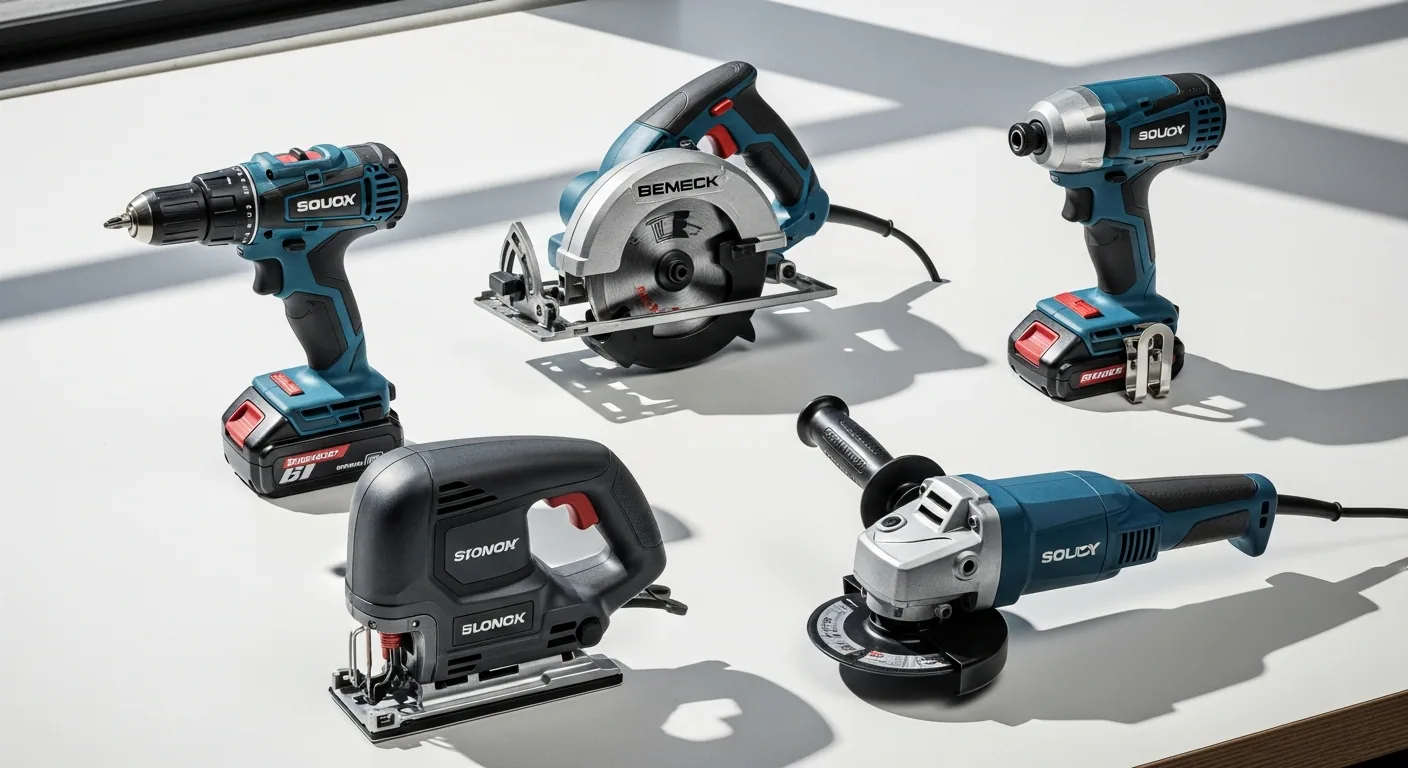
Introduction
You're standing in your garage on a Saturday morning, staring at a project that suddenly feels impossible without the right tools. Maybe you're hanging shelves, building a deck, or finally tackling that trim work that's been waiting for months. The thing is, having a tool and having the right tool are completely different experiences. The difference between mediocre and genuinely great power tools comes down to three things: relentless reliability when you need it most, the ability to actually finish what you started without battery drama, and ergonomics that don't leave your hands screaming by hour two. Everything covered here addresses those fundamentals—tools that earn their spot in your workshop through real-world performance, not marketing hype.
What separates the tools worth your money from the rest is simple: they do exactly what they promise, they last through actual abuse, and they make the work feel less like a chore. A great power tool removes friction from your projects. You're not fighting the tool; the tool is working for you.
This article breaks down six essential tools and storage solutions that serious DIYers and professionals trust, plus the practical framework to choose what actually fits your needs.
1. DeWalt 20V MAX XR Cordless Drill/Driver
This is the drill that shows up on job sites and in serious home workshops because it just works. The 20V lithium-ion system delivers consistent power without the performance fade you get from cheaper batteries, and the brushless motor means you're getting roughly 57% more runtime compared to older brushed designs. That matters when you're in the middle of a 50-hole decking project and don't want to swap batteries mid-task.
The 2-speed transmission is genuinely clever—you can dial in either high torque (0-450 RPM) for driving screws into dense wood or high speed (0-1,500 RPM) for rattling through holes. The 1/2-inch ratcheting chuck grips bits firmly enough that there's no annoying slippage, and the compact size means you can actually maneuver it in tight spaces without feeling like you're wrestling a hammer. The integrated LED light is a small touch that makes a real difference when you're working inside cabinets or under joists where shadows kill visibility.
The honest trade-offs: batteries and chargers cost extra (plan on another $100+), and it's not the featherweight option if you're doing extended overhead work, though the ergonomic design does help. This tool is built for real work, not just appearing in your garage looking important.
Best for: Anyone who wants a drill that won't embarrass them on a serious project and doesn't mind investing in quality that lasts.
2. Milwaukee M18 FUEL 18V Lithium-Ion Cordless Brushless Oscillating Multi-Tool
Call this the Swiss Army knife of power tools. One moment you're cutting through drywall, the next you're sanding trim, then scraping old caulk, and finally grinding rust off metal—all with the same tool by just swapping out accessories. The M18 FUEL's brushless motor maintains consistent power whether you're barely touching the surface or pressing hard against resistance, so your results stay predictable across different materials and tasks.
The variable speed control (8,000-20,000 oscillations per minute) means you're not stuck with one-speed aggression. Delicate detail work on wood calls for slower speeds; aggressive tile removal needs the full throttle. The Starlock accessory system is a genuine time-saver because blade changes happen without hunting for a wrench or fumbling with Allen keys. The low-vibration design means your hand won't feel like it's been through a paint mixer after an hour of work, and the battery life is legitimately impressive—often outlasting individual blades themselves.
The realistic downside is the price tag. At $249 for the tool alone, you're looking at a serious investment, and proprietary Milwaukee accessories add cost. But for someone who actually uses a multi-tool regularly rather than twice a year, this pays for itself in sheer efficiency and reducing the number of separate tools you need to buy.
Best for: DIYers and professionals who tackle varied projects and value doing multiple jobs with precision from one tool.
3. Philips Wi-Fi Palm Recognition Smart Deadbolt
This one's different from the power tools—it's about security and modern convenience meeting at your front door. The biometric palm recognition is genuinely cool in practice: no fumbling for keys when your hands are full, no guests wondering where you hide the spare. You literally just present your palm and step inside. The Wi-Fi connectivity means you can remotely lock and unlock from anywhere, check access logs (useful if you're paranoid about whether you locked up), and integrate it with your broader smart home ecosystem.
The security angle is solid because a palm is far harder to replicate than a forgotten PIN or lost key. There's always the privacy conversation around biometric data, though most quality manufacturers (Philips included) process that data locally on the device rather than sending it to the cloud, which addresses the main concern. The design is actually sleek enough that it looks intentional on your door, not like an afterthought.
The real consideration is cost—you're easily spending 2-4x what a traditional deadbolt costs. And you're dependent on Wi-Fi for the remote features (though the palm recognition still works if your internet goes down). If your neighbors still use physical keys and you're the experimental type in your friend group, this is your move.
Best for: Homeowners who want security technology that feels genuinely useful (not just cool for the sake of it) and don't mind paying for biometric convenience.
4. Milwaukee PACKOUT Rolling Deep Drawer Toolbox (48-22-8420)
Tool storage might sound boring, but this rolling toolbox is the organizational system that makes you actually want to keep your workshop tidy. It's the foundation of Milwaukee's PACKOUT modular system, which means it doesn't exist in isolation—it's designed to stack, connect, and customize with dozens of compatible organizers and cases to build exactly the storage setup you need.
The construction is genuinely tough: impact-resistant polymer takes abuse that would crack a wooden toolbox, and the deep drawers with steel ball-bearing slides open smoothly even when loaded with heavy tools. The wheels roll across concrete, gravel, and uneven job site terrain without fighting you. The latches and seals are engineered to keep dust and water out, which matters if your tools spend time in damp environments. Once you have one PACKOUT component, adding more creates a cohesive, stackable system that grows with your tool collection rather than becoming a cluttered mess of mismatched boxes.
The honest limitations: building a comprehensive PACKOUT system gets expensive quickly (each component costs money), and when fully loaded with a drill, impact driver, nailer, and all the bits and fasteners, it's heavy—rolling helps, but it's not featherless. It also demands workshop floor space when multiple units stack up. For someone with 3-4 power tools and some organization needs, though, this is cheaper and vastly more effective than scattered toolbags.
Best for: Serious DIYers and professionals who want a storage system that actually scales with them and keeps tools protected and organized.
5. Bosch Bluetooth-Connected Laser Level
This is a traditional laser level that grew up and went to tech school. Instead of squinting at a traditional bubble level or relying on your "good eye," it projects accurate laser lines across your wall or work surface. The precision here is genuinely useful—hanging a picture frame off-center by half an inch looks objectively wrong, and this removes the guesswork entirely.
The Bluetooth integration with a smartphone app is where it gets interesting. You can control settings remotely, get real-time measurements, and follow guided setup instructions through your phone. That sounds like unnecessary smartness until you're actually installing shelving across an entire wall solo, and you can see the readout on your phone from six feet away instead of crawling up and down a ladder to eyeball the bubble. It significantly streamlines workflows and catches mistakes before you drive permanent holes in drywall.
The trade-off is substantial: you're paying $200-500+ compared to a traditional level at $10-20, and you're dependent on a charged smartphone to use the advanced features. Battery life can be a consideration if you're using this continuously for 8+ hours without a break. For weekend DIY projects and occasional home improvement, you might be over-tooled. For someone regularly installing shelving, trim, or tile, the accuracy and speed justify the investment.
Best for: Detail-oriented DIYers who install trim or shelving frequently and want professional-grade accuracy without the guesswork.
6. Ryobi ONE+ HP 18V Brushless Cordless 16-Gauge Straight Finish Nailer
Finish nailing is one of those tasks that separates polished work from "yeah, I did that myself" work. This cordless nailer drives 16-gauge finish nails up to 2½ inches long with consistent depth, meaning your trim and molding go on looking intentional rather than haphazard. The brushless motor provides enough power to punch through dense wood without hesitation, and you get roughly 1,800 nails per charge—enough for a serious trim project without swapping batteries.
The real strength is integration into Ryobi's ONE+ HP ecosystem. If you already own a Ryobi drill or circular saw, this nailer uses the same batteries, which means you're not building two separate tool systems. Over 300 compatible tools means this battery investment scales across your entire workshop, which is genuinely valuable for budget-conscious builders. The tool-free depth adjustment and jam clearing save frustration and downtime.
The honest reality: it's heavier than a pneumatic finish nailer (cordless always is), and you need to budget for batteries and charger separately, which pushes the real cost closer to $350-400 for a functional kit. If you're a Ryobi ecosystem person already, this is an obvious pickup. If you're starting fresh and want maximum compatibility options, you might choose something else.
Best for: DIYers installing trim and molding who already use Ryobi tools or want to build within that battery ecosystem without pneumatic compressor hassles.
How to Choose the Right DIY Power Tools
Battery System Compatibility Matters More Than Brand Loyalty
Here's the thing nobody tells beginners: buying tools from the same brand is less about snobbery and more about practical economics. Ryobi, DeWalt, Milwaukee, and Bosch all make solid tools, but each has its own battery system. If you buy a DeWalt drill and then pick up a random Milwaukee nailer, you've now got two battery ecosystems collecting dust. Your goal should be committing to one ecosystem early, then building within it. Check how many tools are available in that system—Ryobi wins on sheer quantity and budget friendliness, while Milwaukee and DeWalt offer more professional-grade options at higher price points. A 20V or 18V brushless drill from any major manufacturer will outperform a 12V from a decade ago, so don't obsess about voltage differences. Focus on the ecosystem and what accessories it offers.
Brushless Motors Are No Longer Luxury—They're Standard
Older brushed motors generate heat, lose power over time, and drain batteries faster. Brushless motors run cooler, last longer, and deliver consistent performance throughout the battery's charge. You'll see brushless options in nearly every category now, and they're worth the slight premium because they directly translate to longer tool life and better performance. This isn't marketing—it's physics. A brushless drill will keep power delivery consistent from first nail to the 500th; a brushed one will noticeably fade as the battery drains.
Runtime vs. Power: Find Your Balance
A 4-amp-hour battery lasts longer than a 2-amp-hour battery in the same tool, but it's heavier and takes longer to charge. For weekend DIY projects where you're not punching through 200 screws in a single sitting, a 2-amp-hour might be fine and keeps the tool lighter. For full-day projects or professional work, invest in the larger capacity. Real talk: most people end up buying multiple batteries anyway, so you might as well get one smaller (for lightweight work) and one larger (for serious projects) rather than choosing one and compromising on both counts.
Weight and Ergonomics Determine Actual Usage
A powerful tool you hate holding doesn't get used. Period. If you're doing overhead work (installing soffit, trim, anything above your head), every ounce matters because fatigue sets in fast. Compact, lightweight tools save your shoulders. For bench work or ground-level projects, a slightly heavier tool with more power and features might actually be the better choice. Go hold these tools in person if possible—your hands, not spec sheets, should make the final decision.
Consider Secondary Features Carefully
LED work lights, tool-free blade changes, and Bluetooth connectivity sound nice but ask yourself: will you actually use this? An LED on a drill you use in a bright garage might be worthless. A Bluetooth level you use for one bookshelf project yearly is feature creep you're paying for. Prioritize what solves actual problems in your real workflows, not what sounds impressive.
What Makes These Tools Worth Your Workshop
Three tools stand out as genuine investments worth making: the DeWalt 20V MAX XR Drill for reliability that outlasts your projects, the Milwaukee PACKOUT system for organization that actually scales, and the Ryobi ONE+ HP Finish Nailer if you're building a budget-friendly battery ecosystem.
The drill is non-negotiable—a quality cordless drill is the foundation everything else builds on. The PACKOUT solves the problem most DIYers ignore until they're neck-deep in scattered tool bags and lost bits. And the finish nailer bridges the gap between pneumatic quality and cordless convenience without forcing you into an expensive tool system.
Start by identifying which ecosystem matches your budget and tool count, then buy the best-reviewed option in that system—you'll be served well regardless.
Related posts

6 Beauty & Skincare Products Reviewed: Our Honest Picks for Every Routine
VELCRO Brand Heavy Duty Fasteners Review: Strong, Reliable Hold for Tough Jobs

7 AI Health Wearables That Actually Deliver Personalized Insights