
7 AI Health Wearables That Actually Deliver Personalized Insights
Discover 7 AI-powered health wearables that track sleep, recovery, and wellness. Compare Oura Ring, WHOOP, Apple Watch, and more to find your perfect fit.
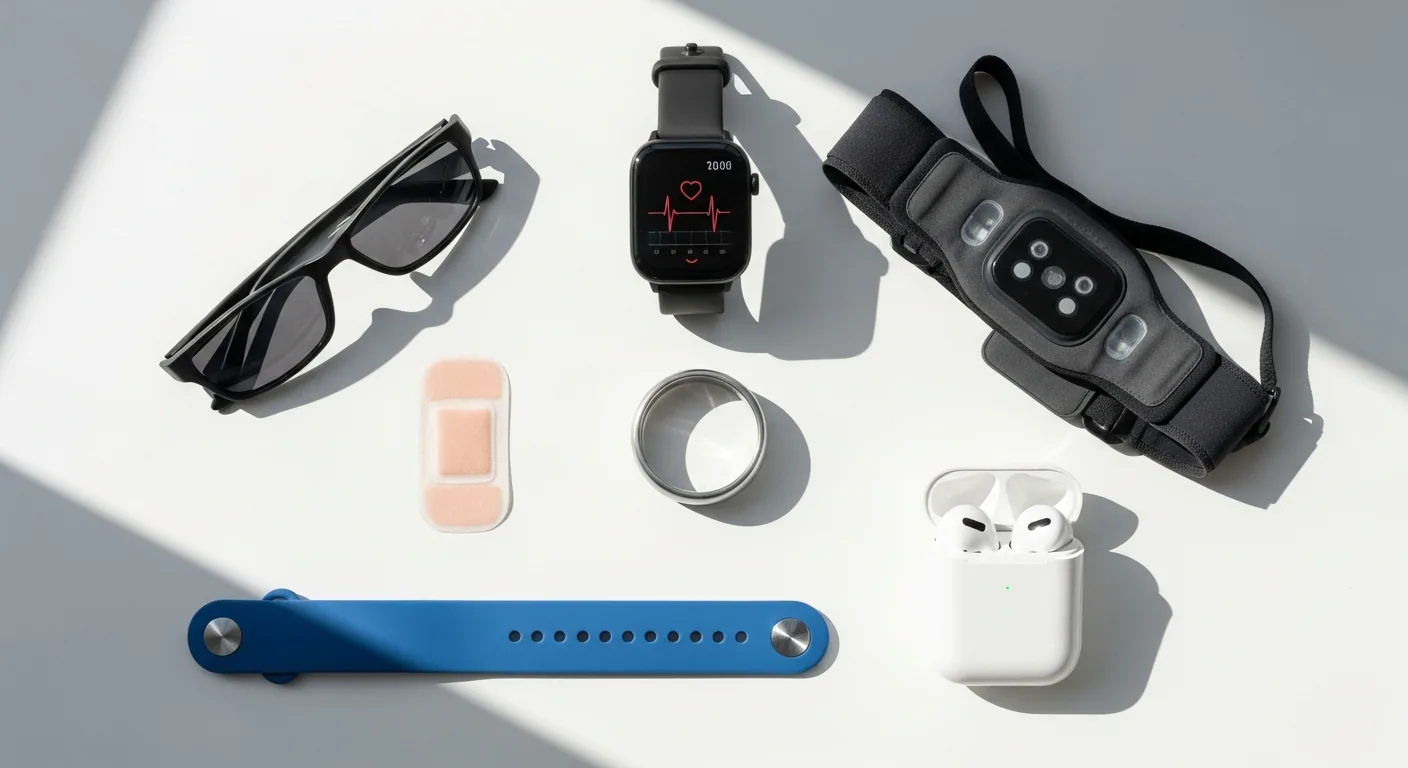
You're probably tracking your steps, maybe your sleep, but you're still missing the bigger picture. Your health data sits in silos—a bit from this app, a bit from that device—and none of it talks to the others. The real breakthrough in wearables isn't just collecting more data; it's having AI actually understand what that data means for your specific body, your goals, your recovery needs.
What separates a truly useful health wearable from one that just vibrates at you is whether it's actually smart enough to make predictions and offer real guidance. A mediocre tracker tells you "your heart rate was 72 bpm." A great one tells you "based on your sleep, stress, and training load, you're not ready to crush that workout today—dial it back." That's where AI comes in. The difference between generic advice and personalized coaching is everything.
Here's what you're getting: a breakdown of seven AI-powered wearables that genuinely move the needle on health insight, whether you're chasing athletic performance, mental clarity, or just wanting to actually understand your body.
1. Oura Ring (Latest Generation)
The Oura Ring feels like the future—except it's available today. It's a titanium ring that sits on your finger and somehow tells you more about your sleep than devices ten times its size. The magic is in the placement: your finger is closer to your core temperature and heart, making readings more accurate than wrist-based devices for HRV and thermal data. The AI here doesn't just track; it synthesizes everything into a single "Readiness Score" each morning, basically answering the question: "Should I go hard today or recover?"
What makes this different from a smartwatch is the absence of a screen. That sounds like a limitation—it is, kind of—but it's also liberating. You're not getting constant notifications pushing you toward some arbitrary goal. The ring sits quiet on your hand, collects data throughout the day and night, and when you want insights, you open the app. This works brilliantly for professionals who don't want one more screen demanding attention, or for anyone who sleeps with a watch and finds it uncomfortable.
The tradeoff is real, though: you'll pay $299–$549 upfront and then a monthly subscription on top. Activity tracking isn't its strong suit (it relies on motion detection rather than GPS), and that screenless design means you can't get a quick glance at your heart rate during a workout. Battery life is genuinely impressive—4–7 days—but the monthly fee might sting if you're on a budget.
Best for: Busy professionals and sleep-obsessed biohackers who value insight over notifications.
2. WHOOP 4.0 (with WHOOP Coach)
WHOOP is built on a radical idea: stop counting steps and start counting what actually matters—recovery, strain, and sleep quality. The 4.0 is a screenless band that's basically a laboratory on your wrist, collecting heart rate variability, respiratory rate, and skin temperature continuously. But here's where it gets interesting: the WHOOP Coach, an AI system powered by tech like GPT-4, turns that raw physiological data into actual conversations.
You can ask the Coach things like "Why was my recovery low yesterday?" or "Should I do a high-intensity session tomorrow?" and get back a personalized answer rooted in your data. That's not generic—it's your data, analyzed by your personal AI coach. Elite athletes use this because it prevents the silent killer of training: overtraining. You get a Strain score that tells you how hard you pushed, and a Recovery score that tells you if your body can handle another hard session. Combine those with sleep data, and you've got a legitimate competitive advantage.
The catch: WHOOP is subscription-only at roughly $30/month (or cheaper annually), and that adds up. It's also designed for people who care deeply about performance metrics. If you just want to know how many calories you burned on your lunch walk, this is overkill. The learning curve can be steep too—there's a lot of data, and understanding it takes some effort.
Best for: Serious athletes and fitness enthusiasts who treat their training scientifically and want AI guidance on recovery.
3. Apple Watch (Latest Generation)
The Apple Watch is the Swiss Army knife of wearables. It does fitness tracking, it's a smartwatch, it has safety features, and increasingly, it's becoming a medical device. The latest generation (Series 11, Ultra 3) packs a neural engine that lets the device process AI tasks right on the wrist—things like analyzing your ECG data, detecting irregular rhythms, or understanding what you're saying to Siri without sending it to servers.
This matters for privacy, but also for speed and practicality. You can log meals, ask about your trends, or set reminders by talking to your wrist. The watch includes an ECG app that's FDA-cleared, blood oxygen sensing, temperature monitoring, and even features like fall detection and crash detection that could literally save your life. The AI here is more about proactive health—spotting anomalies, detecting trends, offering subtle nudges.
The downsides are significant for non-iPhone people: if you use Android, don't bother. For iPhone users, you'll need to charge this daily, which means you're probably not wearing it during sleep unless you're meticulous about overnight charging. It's also expensive—$399–$799+ depending on which model and material you choose. Some advanced features vary by region due to regulatory approval timelines.
Best for: iPhone users who want a cohesive ecosystem and don't mind daily charging for the most feature-rich option.
4. Withings ScanWatch 2
The Withings ScanWatch 2 looks like a luxury analog watch. That's the whole point. You can wear it to a formal dinner without looking like you're in a training montage. But underneath that gorgeous face is serious medical hardware: an FDA-cleared ECG for atrial fibrillation detection, continuous SpO2 monitoring, and—this is cool—24/7 body temperature tracking.
The AI here works in the background, analyzing your temperature trends, your HRV, your sleep patterns, and your overall recovery. It'll flag abnormalities that might indicate illness before you feel symptoms. The battery lasts up to 30 days, which means you can forget about charging it for weeks and still get continuous health monitoring including sleep tracking. That's a huge advantage over devices that need daily charging.
The tradeoff is that you're sacrificing smartwatch convenience. No third-party apps, limited notifications, a small digital display that can be hard to read. It won't check your email or take calls. If you want health monitoring without the tech-watch aesthetic, this is excellent. If you want a full-featured smartwatch that happens to track health, look elsewhere. Also, there's no mandatory subscription, which is refreshing.
Best for: Elegance-conscious people who want serious medical-grade health tracking without advertising "I'm wearing a computer."
5. Muse S (Latest Generation)
Muse S is the outlier on this list because it's not primarily about fitness or general health—it's about your brain. It's a headband with EEG sensors that monitor your actual brain activity in real time. During meditation, it gives you feedback: when your mind wanders, you hear a sound cue. When you're focused, it sounds peaceful. That's biofeedback in real time, and the AI learns your patterns, adapting guided sessions to your specific mental state.
For sleep, it offers "Digital Sleeping Pills"—soundscapes that respond to your brain activity to help you fall asleep faster and stay asleep longer. The latest versions like the Athena model add fNIRS sensors to measure blood flow and oxygen levels in your brain, giving insights into focus and relaxation that no other consumer device captures. This is genuinely therapeutic if you struggle with anxiety, racing thoughts, or insomnia.
The reality: it's specialized. If you're not interested in meditation or sleep optimization, this isn't for you. Some people find the headband uncomfortable, especially side sleepers. It requires consistent setup (sensors need proper contact), and there's a learning curve. It's also pricey for a niche device. But if you value mental health as much as physical fitness—and you should—this is remarkable.
Best for: People serious about meditation, sleep quality, and mental health who want objective biofeedback, not just vibes.
6. Fitbit Sense 2
The Fitbit Sense 2 targets the middle ground: people who want holistic health tracking but don't want to learn a PhD's worth of metrics. Its standout feature is the continuous electrodermal activity (cEDA) sensor, which detects your body's stress responses all day long. The AI processes this and alerts you when stress is building, then offers guided breathing or other interventions.
Beyond stress, you get solid sleep tracking with detailed stage analysis, ECG capability, skin temperature monitoring, and activity tracking with built-in GPS. The battery lasts 5–6 days, and the app is genuinely intuitive—my grandmother could use this. It works with both Android and iOS, so there's no ecosystem lock-in. Many of the deeper insights do require a Fitbit Premium subscription, though the core tracking is free.
The tradeoff: it's less of a smartwatch than the Apple Watch (fewer app integrations, no third-party apps really) and less specialized than WHOOP or Oura. It's trying to be a generalist, which means it does everything decently but nothing brilliantly. GPS accuracy can be spotty compared to Garmin. If you want stress management and mental health focus, though, the value is real.
Best for: Health-conscious people who want an accessible, well-rounded tracker that emphasizes stress and mental wellness.
7. Garmin Venu 3
Garmin has always owned the accuracy space—their GPS and heart rate monitoring are best-in-class—and the Venu 3 layers sophisticated AI on top of that foundation. The standout feature is "Body Battery," an AI-synthesized score that combines sleep quality, HRV, stress, and training load to tell you your actual energy level. It even detects and logs naps, incorporating them into your recovery picture.
The watch has a vibrant AMOLED display, excellent battery life (up to 14 days), and personalized coaching for 30+ sports. The AI coaching isn't as conversational as WHOOP Coach, but it's more actionable than most other devices. You get specific workout recommendations based on your recovery status. You can make calls and use voice assistants from the wrist. It's a device that genuinely excels at both fitness tracking and being a useful smartwatch.
The downside: Garmin's ecosystem is smaller than Apple's or Android Wear's, so fewer third-party apps. The interface has a learning curve. It's pricey at $449–$499. And if you're not into fitness metrics, some of the data can feel overwhelming.
Best for: Active people and sports enthusiasts who want accuracy, coaching, and smartwatch functionality without sacrificing battery life.
How to Choose the Right AI Health Wearables
What's Your Primary Goal?
This is the first question, and it matters more than specs. Are you trying to optimize athletic performance (WHOOP, Garmin), improve sleep (Oura, Muse S), manage stress and mental health (Fitbit Sense 2, Muse S), or get a comprehensive medical-grade device (Apple Watch, Withings)? Some devices are generalists; others are specialists. Oura is brilliant at sleep but weak at fitness. WHOOP is obsessive about recovery but doesn't care about your afternoon stroll. Muse S is a mental health tool, full stop. Be honest about what actually matters to you—if you buy a sports watch when you really need sleep optimization, you'll end up frustrated.
Subscription Tolerance and Budget
Some devices are free with an upfront cost (Withings ScanWatch 2). Some are subscription-heavy (Oura requires a monthly fee; WHOOP is subscription-only). Some are a hybrid (Apple Watch has optional subscriptions for enhanced features). Calculate the true cost: a $299 Oura ring becomes $479 in year one if you pay monthly, then $349 every year after. A $30/month WHOOP subscription is $360 yearly. That matters if you're budget-conscious. Conversely, if continuous coaching matters to you, that subscription cost is the feature, not the burden.
Comfort and Form Factor
You'll only benefit from a wearable you actually wear. Smartwatches (Apple, Garmin, Fitbit Sense 2) need daily charging, which is fine for some people and annoying for others. Rings and bands (Oura, WHOOP) last days between charges. The Withings lasts 30 days. If you sleep with your watch, daily charging is a problem—you need something that goes a week or more between charges, or you're not getting sleep data. If you find headbands uncomfortable, Muse S is out. If you hate watches on your wrist, try Oura. Comfort is non-negotiable because an uncomfortable device becomes a drawer device.
Ecosystem and Smartwatch Features
How much do you care about notifications, third-party apps, and phone-like features? Apple Watch has the richest ecosystem if you're in the Apple world. Garmin and Android Wear devices offer a middle ground. Oura, WHOOP, and Muse S are pure-play health devices with minimal smartwatch features. If you want your wearable to be your second phone, that narrows your choices. If you want it to be a health device that stays out of your way, that opens different options.
What Matches Your Wellness Priorities
If you're optimizing for sleep and recovery without constant coaching, Oura Ring is your answer—discreet, accurate, and hands-off once you've checked the morning readiness score. If you're an athlete who wants AI actively coaching your training and recovery, WHOOP 4.0 is worth the subscription cost; the Coach feature is genuinely personalized. If you want a comprehensive device that does fitness, health monitoring, smartwatch features, and has an incredible ecosystem, Apple Watch dominates—but only if you're an iPhone user and willing to charge daily.
For something more balanced, Withings ScanWatch 2 offers serious medical-grade monitoring in a watch you'll actually want to wear. For mental health and sleep quality, Muse S is in a category of its own. Fitbit Sense 2 is the pragmatic choice if you want good general health tracking with a focus on stress without overcomplicating things. Garmin Venu 3 wins if you're active and want the most accurate fitness data plus useful smartwatch features.
Pick the one that aligns with your actual priorities—not the one with the most features—and commit to wearing it consistently. The best health tracker is the one you'll keep on your wrist for six months.
Related posts

Charmin Ultra Soft Cushiony Touch Review: Premium Comfort for Everyday Use
7 AI Health Wearables That Actually Deliver Personalized Insights

10 Wardrobe Essentials & Accessories Reviewed: Our Honest Picks for 2026