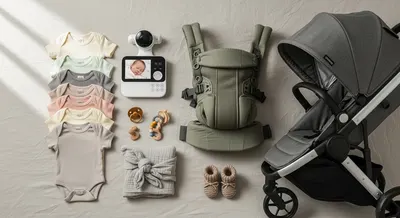
5 Baby Essentials Reviewed: Our Honest Picks for Modern Parents in 2025
Discover 5 essential baby products for 2025. From smart monitors to carriers, we review top picks that genuinely improve parenting and infant safety.
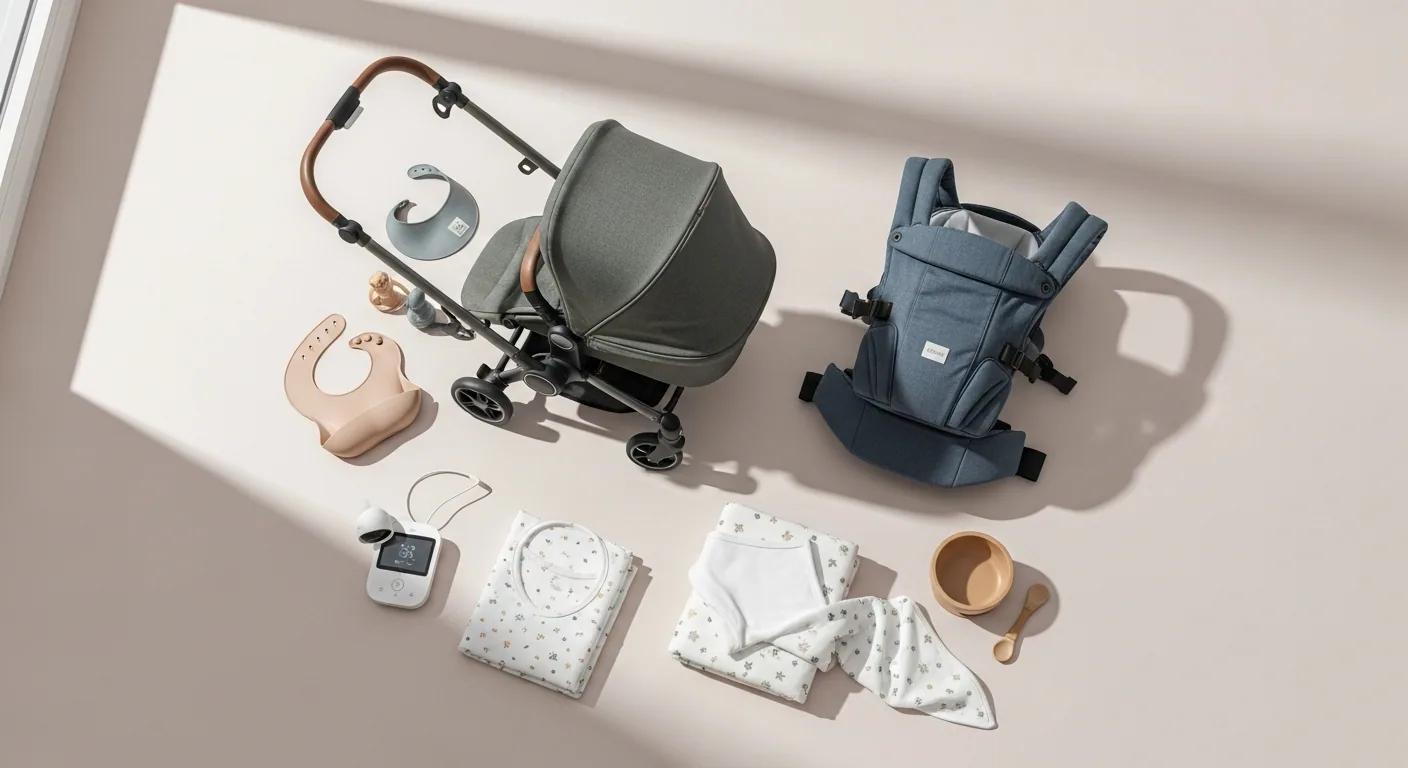
You're standing in a store aisle with your newborn sleeping in your arms, staring at forty different baby monitors while internally screaming. Or you're packing for a flight and realizing you're about to lug a car seat, stroller frame, and base through three airports. These moments—the ones where you're exhausted, overwhelmed, and questioning every purchase decision—are exactly why having the right baby essentials matters so much.
What separates the truly useful products from the ones gathering dust in your closet? It's simple: the best baby gear solves actual problems without creating new ones. It adapts as your baby grows, it doesn't require an engineering degree to operate, and it genuinely makes your life easier, not just theoretically but in those 3 AM moments when you're running on fumes.
Here's what we're covering: five baby essentials that actually deliver on their promises, from health monitoring to travel solutions.
1. Owlet Dream Duo 2
This isn't just a baby monitor—it's a vital signs tracker that happens to have a camera. The Owlet Dream Duo 2 combines a 1080p HD camera with a wearable sock that monitors your baby's pulse rate and oxygen levels in real-time. If anything dips outside safe parameters, you get an app notification immediately. That's genuinely different from watching a video feed and hoping everything's fine.
The setup is thorough: night vision works well, two-way audio lets you comfort your baby from another room, and the app provides sleep insights that actually help you understand your baby's patterns rather than just feeding you random data. The predictive sleep features—which flag when a nap or bedtime is approaching—sound gimmicky until you're using it to finally understand why your baby's been cranky. The self-sterilizing feature and wide-angle view round out a comprehensive system.
Here's the honest part: this costs $399–$449, which is steep. It's also heavily Wi-Fi dependent, and if your nursery has spotty coverage, you'll spend hours troubleshooting. You're also tethered to your phone for monitoring rather than having a dedicated screen. These aren't deal-breakers if you're the type who checks their phone constantly anyway, but they're worth acknowledging.
Best for: Parents who want clinical-level monitoring data and aren't bothered by relying on their smartphone for video feed.
2. Ergobaby Omni Classic Baby Carrier
A genuinely good carrier does something radical: it lets you keep your hands free without your back feeling like it's being slowly crushed. The Ergobaby Omni Classic nails this with an ergonomic design that distributes weight across your hips and shoulders instead of just your shoulders. You can wear it for hours on a city walk or while doing dishes without wincing.
What makes this one special is flexibility. Four carrying positions—front inward, front outward, hip, back—mean it grows with your baby from newborn through toddlerhood without requiring an infant insert. The 100% premium cotton is soft and breathable, there's a built-in storage pouch for your phone and keys, and the privacy hood works for sun protection and discreet nursing. Machine washable, durable, and genuinely easy to adjust even when your baby is squirming.
The trade-offs are real though. At $179–$200, it's not the cheapest option out there. It's also bulkier than a simple wrap, so if you're traveling light, this might feel cumbersome. The initial learning curve on adjustment isn't terrible, but it's not intuitive for everyone either.
Best for: Parents who'll wear a carrier daily and value comfort enough to invest in quality construction.
3. MAM Easy Start Anti-Colic Bottles
Colic is a special kind of hell, and MAM figured out that pressure buildup inside the bottle is a main culprit. Their vented base regulates pressure, meaning less air intake and fewer of those piercing cries at 2 AM. Babies also seem to accept the SkinSoft™ silicone nipple more readily when they're transitioning between breast and bottle, which matters when you're trying to maintain nursing.
The real genius move, though? These bottles self-sterilize in the microwave in three minutes. When you're traveling, pumping at work, or just exhausted, microwaving a bottle instead of boiling or running it through a sterilizer feels miraculous. The wide openings make filling and cleaning straightforward, the lids actually seal without leaking, and they're BPA-free, which is non-negotiable.
The complexity is the flip side: if you're not using the self-sterilization feature, you've got multiple parts to hand wash. Some parents find that annoying. They're also a bit pricier than basic bottles, though the multi-pack pricing softens that blow.
Best for: Nursing parents introducing bottles or anyone dealing with a colicky baby who needs to travel frequently.
4. Regalo Easy Step Walk Thru Gate
Safety gates don't need to be complicated, and the Regalo Easy Step is proof. It pressure-mounts into doorways and hallways without requiring you to drill holes or permanently alter your walls. The one-hand release is actually one-handed, meaning you can open it while holding a baby or a full laundry basket. The gate width adjusts from 30 to 39 inches, with extension kits available for wider openings.
It's made from all-steel, which means it withstands the constant opening, closing, and rough treatment that kids inflict on gates. Parents also use it to contain pets, which is a nice bonus feature. The price point is refreshingly reasonable—$40 to $70 for reliable, durable safety equipment.
The limitations are worth mentioning: pressure-mounted gates aren't safe for the top of stairs (you need hardware-mounted there), the bottom bar can trip adults if you're not used to it, and you might need to adjust the fit a few times before it's truly secure. It's also not the most aesthetically pleasing option if your home aesthetic matters to you.
Best for: Renters or anyone who needs flexible, easy-to-install barriers that don't require damaging walls.
5. Doona Car Seat & Stroller
The Doona is the definition of a solution to a problem you didn't know you had—until you use it. It's a car seat that transforms into a stroller in seconds by unfolding wheels and retracting them again for car installation. If you've ever unbuckled a sleeping baby from a car seat, transferred them to a stroller, and watched them wake up furious, you understand why this matters.
It's rear-facing suitable from birth to 35 pounds, meets serious safety standards (5-point harness, side impact protection, anti-rebound features), and is aircraft-approved, which eliminates a massive stress point when flying. For urban parents, frequent travelers, or anyone who values not juggling multiple pieces of equipment, this is genuinely revolutionary. The compact footprint makes navigating tight spaces and public transit infinitely easier.
The costs are real: $550–$600, plus the fact that it's only useful until your baby hits 35 pounds, so it's not a long-term investment. It's also heavier than you'd expect, making repeated lifting in and out of the car potentially annoying. The storage basket is essentially non-existent, so you can't load it up with gear like you might a traditional stroller.
Best for: Urban dwellers, frequent travelers, or anyone prioritizing convenience enough to justify the premium price and limited lifespan.
How to Choose the Right baby essentials 2025
Assess Your Lifestyle and Living Situation
Your daily life dictates what you actually need. Someone in an apartment navigating city transit has completely different requirements than a suburban parent with a driveway and car. If you're flying regularly, something like the Doona makes sense; if you're stationary most of the time, a basic gate and bottles solve your problems just fine. Renters should gravitate toward pressure-mounted solutions that don't require wall damage. Parents in tight spaces benefit from compact, multipurpose gear like carriers and transforming car seats.
Prioritize Safety Standards and Certifications
This is non-negotiable. Whatever you buy should meet current safety standards—JPMA certification for furniture, proper safety ratings for car seats, non-toxic materials for bottles. Check that carriers provide proper support and that gates have appropriate locking mechanisms. This is one area where cheaper doesn't equal savings; a recalled product costs more in stress and potential harm than spending extra upfront for something vetted.
Consider the Long-Term Value
Some products work across multiple stages—the Ergobaby carrier from newborn to toddler, the Doona from birth to 35 pounds. Others are more limited (Doona becomes irrelevant after 35 pounds). Calculate cost-per-use. If you're buying something for one phase of life, cheaper is often fine. If it needs to stretch across years, investing in durability and adaptability makes sense. Also consider resale value; many baby products hold value well if you choose well-known brands.
Test Convenience Against Reality
Features only matter if you'll actually use them. A self-sterilizing bottle is worthless if you never use that feature. A monitor with sleep predictions is pointless if you ignore the app. Be honest about your habits. Will you really use a storage pouch on a carrier, or are you being sold on bells and whistles? Does Wi-Fi connectivity appeal to you, or does it sound like one more thing to troubleshoot at 3 AM? The best product is the one you'll actually use consistently.
What Actually Makes These Products Worth Your Investment
The Ergobaby Omni Classic and MAM Anti-Colic Bottles are your everyday heroes—they solve real problems (back strain, colic) without requiring you to change your entire lifestyle. Both are durable, reasonably priced for the quality, and work from day one through their useful lifespan. If you're on a tighter budget or want solid fundamentals, these two are where you start.
If you can stretch your budget, the Doona becomes worth it specifically for travel or urban living situations where its convenience factor saves you genuine stress and space. It's not for everyone, but for the right family, it's transformative.
Start with your actual daily reality—not Pinterest fantasies of perfect parenting—and let that guide which of these five essentials belong in your home.
Related posts

PanOxyl 10% Benzoyl Peroxide Acne Foaming Wash Review: Powerful Relief for Stubborn Breakouts

8 Gourmet Pantry Essentials Reviewed: Our Honest Picks for Quality Cooking

Sports Research Collagen Peptides Review: Is This Hydrolyzed Collagen Powder Worth It?