
13 Best Baby Gear Products Reviewed: Monitors, Carriers, Strollers & More
Discover 13 essential baby products reviewed: monitors, bottles, carriers, strollers & more. Find the right gear for your family's needs.
Introduction
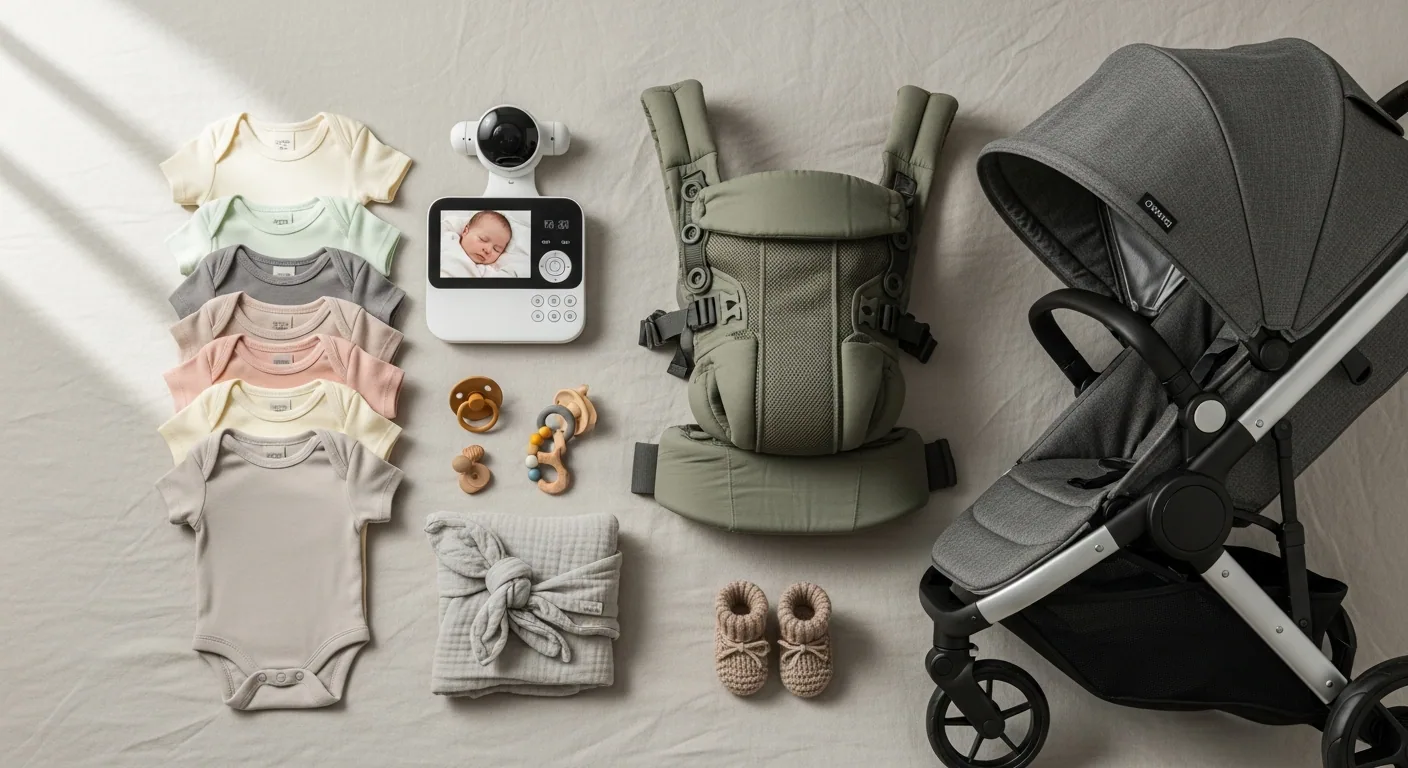
You're standing in the baby aisle of a store (or scrolling through endless websites at midnight), and there are about a thousand products promising to be "essential." Here's the reality: most of them aren't. But some genuinely solve real problems—the ones that make you wonder how you ever survived without them. The difference between great baby gear and the mediocre stuff gathering dust in your closet comes down to one thing: does it actually make life easier, or does it just look good in the nursery photo? Great gear either solves a real parenting problem, grows with your child, or simply works reliably without drama.
What separates the winners from the also-rans is durability, thoughtful design, and honest versatility. Bad gear breaks after three months, requires an engineering degree to use, or becomes obsolete the moment your baby hits a new stage. Good gear anticipates what you actually need before you know you need it. We're talking about products that parents still rave about years later—the ones friends ask you about specifically because they saw how much simpler your life got.
Below, you'll find twelve genuinely useful baby products, each with its own strengths and honest trade-offs.
1. Nanit Pro Baby Monitor
The Nanit Pro is the overachiever of the monitor world. It's not just watching your baby sleep—it's analyzing sleep patterns, tracking breathing motion, monitoring humidity, and sending you a tidy video summary every morning. The overhead crib view is actually genius; you see everything from a perspective that mimics how you'd look down at the crib yourself. The Breathing Band feature (a soft band that goes under the sheet) detects breathing motion without anything electronic touching the baby, which is the kind of peace-of-mind feature that justifies the price for many parents.
The flip side? This monitor leans hard on Wi-Fi, and if your connection is temperamental, you'll notice. The app is solid but requires a subscription to access historical data and deeper insights. It's also expensive—roughly double the cost of basic monitors. You're paying for data and intelligence, not just video.
Best for: Sleep-obsessed parents who want quantifiable data and don't mind paying premium prices for advanced insights.
2. Dr. Brown's Natural Flow Original Baby Bottle
This bottle solves a problem that formula-fed and combination-feeding families actually face: gassy, uncomfortable babies. The internal vent system is legitimately clever—it prevents vacuum buildup and keeps air out of the milk. Fewer air bubbles means less colic, spit-up, and burping hell. Pediatricians recommend these specifically because they also help preserve nutrients like vitamins C, A, and E that can degrade when milk mixes with air.
The catch? More parts to clean. The vent system isn't complicated, but it's definitely more fiddly than a standard bottle. The narrow neck can make filling annoying, and over time the seal can weaken. If you're the type who gets frustrated with baby gear that requires extra steps, this might aggravate you. But if you've got a colicky baby, these bottles might be worth their weight in gold.
Best for: Parents dealing with colic, gas, or babies transitioning between breast and bottle who need consistency.
3. BabyBjörn Bouncer Bliss
This bouncer is minimalist luxury. No batteries, no motors, no app—just soft fabric, good design, and physics. Your baby's own movement creates the bounce, which is weirdly brilliant because it actually helps develop their motor skills and balance. The fabric is soft and breathable, the thing folds flat for travel, and eventually converts into a toddler chair, extending its usefulness to around two years.
The elephant in the room is the price tag ($200+) and the weight limit (roughly 20 lbs for the bounce function). Babies grow fast, so you're looking at maybe a year of solid bouncer use before your kid outgrows the bouncing feature. And if your baby prefers the hypnotic motion of an electric swing, this won't cut it. Some parents find the lack of features limiting; others find it refreshingly simple.
Best for: Parents who want sustainable, screen-free soothing and don't need electronic features.
4. Graco Pack 'n Play Travel Dome LX Playard
This is the Swiss Army knife of baby containment. It's a bassinet, a changing station, and a safe play space all in one box. The built-in elevated bassinet is genuinely useful for the first few months, the changing pad saves your back on travel, and the main playard gives older babies a secure spot to play. The push-button fold is actually fast—no wrestling with springs or cursing at metal bars.
It does get bulky when folded, and the mattress is firm enough that some babies need extra padding. The bassinet and changing components are outgrown quickly, so those features have a limited lifespan. But for the price, the versatility is hard to beat. This is the kind of product that earns its closet space.
Best for: Families who travel frequently or need a dedicated safe space for babies from newborn through toddlerhood.
5. Ergobaby OMNI 360 Cotton Baby Carrier
The OMNI 360 is a babywearing workhorse. It handles all four positions (front inward, front outward, hip, back), supports kids from 7 to 45 pounds, and—crucially—doesn't need a separate infant insert. The lumbar support waist belt and padded straps actually distribute weight evenly, which means you can genuinely wear your baby for hours without your back staging a revolt. The cotton breathes better than synthetic materials, and the built-in UPF 50+ hood is nice for sun protection and nursing privacy.
It's pricey ($160-$200) and can feel warm in hot climates because it's a structured carrier. It's also not as compact as a wrap or simpler soft-structured carriers, so if you're minimalist-adjacent, it might feel bulky. But if you plan to wear your baby regularly across different positions and stages, this carrier actually justifies the investment.
Best for: Parents who babywear actively across multiple positions and want ergonomic support without fussing with inserts.
6. 4moms MamaRoo Multi-Motion Baby Swing
The MamaRoo is tech-forward parenting at its finest. Five different motions (car ride, tree swing, rock-a-bye, wave, kangaroo), five speeds, Bluetooth connectivity for your own music, and app control. If you've got a baby who only settles to a very specific rocking pattern, this swing has a stupidly high chance of nailing it. The contemporary design actually looks intentional in your living room instead of like a medical device took over your home.
The truth? It's expensive, and not every baby will love it. Soothing preferences are wildly individual, so you might spend $250 and have a baby who ignores the whole thing. The footprint is larger than compact swings, and the weight limit means your kid gets maybe 6-9 months of swing use before they can sit up and rebel. You're also banking on the app and Bluetooth working without drama, which isn't guaranteed.
Best for: Parents who need hands-free soothing regularly and like tech-enabled flexibility.
7. Doona Infant Car Seat & Stroller
The Doona is genuinely convenient. Car seat to stroller in seconds, wheels integrated into the base, no transferring a sleeping baby. For urban parents, frequent travelers, or anyone exhausted by logistical puzzles, this is revolutionary. You can go from car to store to café without your baby waking up, and that matters more than it sounds.
But it comes with real caveats. It costs $550-$750, which is steep for a car seat that your kid outgrows by age 3. It's heavy to carry (around 16.5 lbs without baby), and the storage basket is tiny compared to actual strollers. It's also big and somewhat unwieldy as a stroller—it's not quick or nimble. You're paying primarily for the convenience of the transition, which is real but not cheap.
Best for: Urban parents, frequent flyers, or anyone constantly moving between cars and stores who values seamless transitions.
8. Nuna Pipa RX Infant Car Seat
This car seat is the luxury version of car seats. The rigid LATCH system locks in five seconds—genuinely fast and nearly impossible to install wrong. Advanced side-impact protection, a crumple zone in the stability leg, and GREENGUARD Gold certification (meaning fewer harmful chemicals) show thoughtful engineering. The canopy with flip-out eyeshade is genuinely generous on sun protection, and the whole thing weighs less than some competitors, making it easier to carry.
The price ($350-$550) is high, and you're still limited to infant use—you'll need a convertible seat eventually. The canopy can occasionally interfere with the carrying handle, which is minor but annoying. And while it's beautiful to look at, that premium aesthetic is partly what you're paying for.
Best for: Safety-first parents who want premium protection, easy installation, and don't mind the cost.
9. Graco Table2Table 7-in-1 Convertible High Chair
The name says it: seven stages. Reclining infant high chair, traditional high chair, infant booster, toddler booster, youth chair, and table-and-chair set. If you have multiple kids or plan to, this chair can potentially cover every child at every eating stage. The removable, dishwasher-safe tray is honest-to-god practical. The five-point harness keeps younger kids secure, and it can even accommodate two kids simultaneously in certain configurations (one in the high chair, one in a booster).
The storage footprint is real—especially in full high chair mode. Assembly takes patience. And while it's versatile, it's not as sleek as some high chairs. But for the price ($100-$200) and the longevity it offers, this is quietly one of the best value plays in baby gear.
Best for: Families with multiple children or planning more kids who want one feeding solution that grows with them.
10. Hatch Rest Sound Machine & Night Light
This device combines three things (sound machine, night light, time-to-rise alarm) into one compact, app-controlled unit. The soothing sounds are varied, the light customization is impressive, and the time-to-rise feature for toddlers genuinely helps with the "is it wake-up time yet?" problem. It's portable, rechargeable, and the app control works reliably.
The cost is low ($40-$70), which is the sweet spot. The only real limitation is that some features might require a subscription, and you're reliant on the app (and your phone battery). But for establishing consistent sleep routines and reducing the 5 a.m. wake-up chaos, this is genuinely useful.
Best for: Parents of toddlers struggling with early wake-ups, or anyone needing a portable sleep-routine solution.
11. UPPAbaby Vista V2 Stroller
This is the stroller equivalent of owning nice furniture. The all-wheel suspension actually delivers a smooth ride across rough terrain. The reversible seat is genuinely useful for older babies. The storage basket is enormous and actually accessible. The one-step fold works smoothly, and the adjustable handlebar accommodates different parent heights. It includes both a bassinet and toddler seat, so it's viable from day one. And with optional add-ons (RumbleSeat, PiggyBack board), it expands to two or three kids.
The price is aggressive ($1000-$1200), and it's heavy and bulky, especially with multiple seats attached. It won't fit in compact car trunks. Those expansions cost extra. But if you have two kids close together or plan to, and you value smooth maneuverability and storage space, this stroller doesn't need replacing for years.
Best for: Growing families who value durability, smooth rides, and long-term versatility over compact size or affordability.
12. Graco 4Ever DLX 4-in-1 Convertible Car Seat
The 4Ever DLX spans the entire childhood arc: rear-facing for infants (4-40 lbs), forward-facing for toddlers (22-65 lbs), highback booster (40-100 lbs), and backless booster (40-120 lbs). In theory, this is the only car seat you ever buy. The Simply Safe Adjust system lets you tighten the harness and adjust the headrest simultaneously—small feature, huge convenience. The seat passes aggressive safety testing. The machine-washable cover is practical.
It's heavy and bulky, making it difficult to move between cars. Installation can feel complicated the first time. And while the longevity is impressive, you're betting that your kid will be happy in the same seat for over a decade, which is... optimistic. But the cost ($250-$350) and the versatility make it genuinely good value if it works for your family.
Best for: Families wanting one car seat solution from infancy through pre-teen and willing to trade compactness for longevity.
How to Choose the Right Baby Gear
Define Your Real Priorities
Stop thinking about what you're "supposed" to have. Instead, ask: what's actually going to make my life easier? Are you traveling constantly? Do you have a colicky baby keeping you awake? Are you juggling multiple kids? Are you returning to work? Your answers should drive your purchases, not Pinterest. A parent living in a small apartment with a newborn doesn't need the same gear as someone with a three-car garage and twins. Write down your top three pain points, then look for products that address those specific problems.
Consider the Longevity Equation
Baby gear that grows with your child is fundamentally smarter than single-stage gear, but only if your child will actually use it through all stages. The Graco Table2Table only saves money if you have multiple kids or if you'll genuinely use each of its seven configurations. The UPPAbaby Vista only makes sense if you plan more children or value the resale value. The Doona is a beautiful solution for one-year-olds but useless after age three. Think about your family's timeline before dropping serious money.
Quality Over Quantity—Usually
The cheapest option often isn't the worst option, but it rarely surprises on the upside. Decent gear from established brands (Graco, Nuna, BabyBjörn, Ergobaby) tends to be predictable and reliable. Ultra-budget options can be sketchy on safety or durability. You don't need every product to be luxury, but the ones your baby uses constantly (car seats, strollers, carriers) deserve better-than-bargain attention. Splurging on a good stroller that won't collapse on year two makes sense; splurging on a fancy diaper pail doesn't.
Test Before You Commit
Borrow before you buy when possible. Borrow a friend's Ergobaby carrier for a week before spending $180. Try a Mamaroo at someone's house. Sit in a few strollers. Car seats are harder to test-drive, but dealer showrooms often have demo units. Your baby's preferences matter—some babies hate bouncers, others sleep in them like it's their job. Some babies prefer back carries, others freak out. A product's perfect reviews don't mean it's perfect for your specific kid.
Conclusion: Choosing the Right Baby Gear for Your Family
If you're narrowing down where to spend, here's the honest shortlist: The Graco 4Ever DLX Car Seat ($250-$350) offers genuinely outstanding value—one purchase lasts from newborn to pre-teen, it passes aggressive safety testing, and parents reliably keep these car seats for years. The Ergobaby OMNI 360 ($160-$200) is worth the investment if you plan to babywear regularly across different positions; it prevents back pain and grows from newborn to toddler without additional inserts. And if you have multiple children or plan to, the Graco Table2Table High Chair ($100-$200) quietly delivers more longevity and flexibility than any single high chair.
For everything else, let your actual life dictate purchases. Urban parent in a tiny apartment? The Doona makes sense. Exhausted parent of a colicky baby? Dr. Brown's bottles might save your sanity. Parent who travels constantly? The Pack 'n Play might be your MVP. The best baby gear is the stuff that solves your problem, not the problem the internet decided you should have.
Related posts
Smart Air Purifiers That Actually Work: 7 Advanced Systems Tested & Ranked 2026

NatureBell Magnesium Glycinate 500mg Review: Is This High-Absorption Supplement Worth It?
EUHOMY Ice Maker Cleaner & Descaler Review: Keep Your Ice Fresh and Machines Efficient