8 Gourmet Pantry Essentials Reviewed: Our Honest Picks for Quality Cooking
Discover 8 must-have gourmet pantry staples that elevate everyday cooking. From premium flour to finishing oils, our honest reviews reveal what's worth your money.
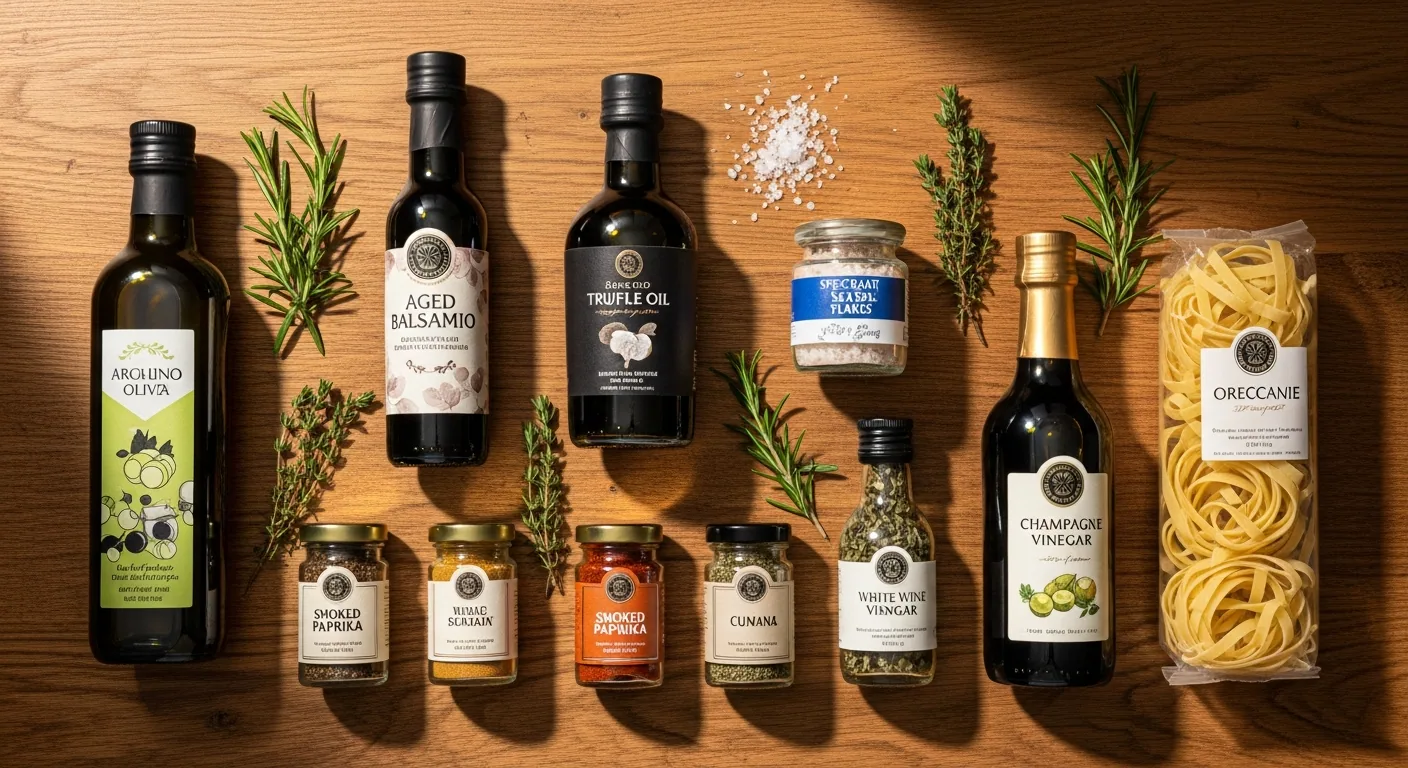
Gourmet Pantry Essentials
You're standing in your kitchen at 6 PM, staring at a box of generic flour and a bottle of sriracha that's been there since last year, wondering why your home cooking never quite tastes like the food at decent restaurants. The difference isn't magic—it's ingredients. A quality butter, the right salt, a proper tomato: these aren't luxuries. They're the foundation that separates a meal you tolerate from one you actually crave.
What separates genuinely great pantry staples from mediocre ones comes down to three things: specificity of source, absence of unnecessary additives, and honest flavor. A premium flour from a reputable mill performs differently than the bargain brand. Irish butter tastes richer because the cows eat grass, not grain. San Marzano tomatoes from that specific Italian region have a particular balance of sweetness and acid that generic tomatoes simply don't. These aren't snobby distinctions—they're real, measurable differences in your finished dishes.
Here are eight gourmet pantry essentials that actually deserve the space in your cabinet.
1. King Arthur Unbleached All-Purpose Flour
King Arthur's flour is the workhorse that never disappoints. Milled from 100% American hard red wheat with an 11.7% protein content, it's unbleached and unbromated—meaning no harsh chemicals lurking in what should be a simple ingredient. This protein level is the sweet spot: high enough to build structure in bread dough, low enough to keep pastries tender. You get the same results batch after batch, which matters more than you'd think when you're already juggling six other things.
The real advantage here is versatility without compromise. Use it for crusty sourdough on Monday and delicate scones on Wednesday, and both will turn out excellently. The natural golden hue (from zero bleaching) is a small visual indicator of quality. It's also Non-GMO verified and Kosher certified, which matters if you care about sourcing. Yes, it costs more than the commodity flour at the big box store, but a 5-pound bag isn't exactly breaking the bank, and the consistency you get back is worth it.
The only real downside is that it requires slightly more water than some bleached flours because unbleached flour absorbs liquid differently. But once you dial in your hydration, you're set.
Best for: Anyone who bakes regularly and wants to stop troubleshooting why their cookies spread differently each time.
2. Nutella Hazelnut Spread with Cocoa
Let's be honest: Nutella is a dessert masquerading as a breakfast item. It's mostly sugar and palm oil, and it makes zero apologies for it. But here's the thing—it actually tastes exceptional at what it is. That creamy, chocolate-hazelnut blend with that particular sweetness is the baseline that every competitor measures itself against.
The flavor profile is distinctive enough that you can use it beyond the obvious toast situation. Swirl it into brownie batter, spread it between cake layers, thin it into chocolate sauce for ice cream. It's a legitimate baking ingredient, not just a condiment. The Italian version (often found in glass jars) has a slightly richer hazelnut presence and different palm oil ratios that some people prefer, though the American version is perfectly fine if that's what you find.
The real catch is portion control—this stuff is engineered to taste irresistibly good, so a little goes a long way. Use it as an occasional indulgence, not a dietary staple, and you're fine. It's also ridiculously widespread, which means you can grab it anywhere.
Best for: People who want genuine flavor in their desserts and aren't pretending Nutella is health food.
3. La Croix Sparkling Water (Pamplemousse)
This is the sparkling water that started the whole obsession. The Pamplemousse flavor is crisp, clean, and actually tastes like grapefruit—no syrupy sweetness, no artificial aftertaste, just carbonated water with real grapefruit essence. It's zero calories, zero sugar, zero artificial anything, which makes it a genuine upgrade from regular soda without the guilt or the weird chemical taste of diet versions.
What makes it a pantry essential rather than just a nice-to-have is versatility. Drink it plain for hydration that feels more interesting than water. Use it as a cocktail mixer for drinks that don't turn into sugar bombs. Have it with dinner as a palate cleanser. It's refreshing without overpowering food, and it sits nicely in that sweet spot between "plain water" and "too much flavor." The fact that it's become ubiquitous speaks to how well it works.
The flip side: if you're someone who loves sweet beverages, the subtlety will feel like a letdown. This is a refined choice, not a crowd-pleaser for people accustomed to sugary drinks.
Best for: Anyone trying to cut sugar intake while actually enjoying what they're drinking.
4. Kerrygold Pure Irish Butter
This is the butter upgrade that actually changes your cooking. Made from grass-fed Irish cows, it has a higher butterfat content (82-83%) than standard American butter (usually 80%), which translates to richer flavor and a more luxurious mouthfeel. The golden color isn't added—it's there because the cows eat grass year-round, which contains beta-carotene.
The taste difference is immediate and undeniable. Spread it on toast, and you notice. Use it in pastry dough, and your croissants taste noticeably better. Melt it over vegetables, and it's a noticeable upgrade. It's also free of growth hormones, antibiotics, and unnecessary additives, which matters if you care about what you're putting in your body. It comes in both salted and unsalted, so you can pick based on what you're cooking.
The downsides are real though: it costs more than conventional butter, and it's harder to spread cold. If you want spreadable room-temperature butter, you'll need to leave it out for 15 minutes. For cooking purposes, this isn't an issue at all.
Best for: People who cook frequently and have noticed that one small ingredient change actually matters.
5. Maldon Sea Salt Flakes
Maldon is not your regular salt. These pyramid-shaped flakes, hand-harvested in England using methods that haven't changed much in decades, deliver a completely different experience than table salt. The crystals are large and crispy, so they don't dissolve on your tongue immediately—they crunch, then melt, hitting your palate with clean, balanced saltiness that has zero bitter aftertaste.
This is strictly a finishing salt, not a cooking salt. You don't use it in pasta water or for seasoning while you cook. You use it at the end, on top of a perfectly seared steak, scattered over roasted vegetables, or even on salted chocolate desserts. It adds both flavor and texture in a way that ground salt simply cannot. One pinch on finished food elevates it noticeably. Chefs keep this in their pockets because it makes such a difference.
The trade-off is price and practicality. It costs significantly more than table salt, and if you're adding it to boiling water where it just dissolves, you're wasting it. But if you embrace it as a finishing ingredient, the box lasts a surprisingly long time, and every dish gets better.
Best for: Home cooks who've noticed that the same recipe tastes more interesting at restaurants and want to know why.
6. Huy Fong Sriracha Hot Chili Sauce
The "rooster sauce" is iconic for a reason. This isn't the most complex sriracha on the market, but it's the most dependable, and that matters. The balance of heat, garlic, and tang works on eggs, in mayo, on fish tacos, in stir-fries, as a pizza topping, stirred into mayo for sandwiches. It's genuinely versatile because it doesn't try to be too fancy. The heat level is substantial but not brutal, so even people with moderate spice tolerance can use it generously.
The flavor is fruity and bright with a whisper of sweetness, which is why it works as a flavor component rather than just heat. You can taste the chili and garlic, not just fire. It's become so prevalent that it's almost a baseline expectation in American kitchens, which is wild for a Vietnamese condiment that became an American staple.
The real problem in recent years has been supply chain issues. There have been documented shortages, so if you find it, keeping a backup bottle makes sense. Also, newer craft sriracha brands have appeared with more complex flavor profiles, so if you want something with more depth, look beyond the rooster. But for straightforward, reliable spice, nothing beats it.
Best for: Anyone who likes heat and wants a condiment that works with almost everything.
7. San Marzano D.O.P. Canned Tomatoes
If you're going to make tomato sauce, San Marzano tomatoes are the non-negotiable. The "D.O.P." certification means these are grown exclusively in one region of Italy (Agro Sarnese Nocerino near Naples), and that specificity matters enormously. These tomatoes are slender, oblong, low in seeds, and meaty—the exact opposite of the watery tomatoes in generic cans.
The flavor is naturally balanced between sweet and acidic, which means your sauce tastes good without needing to add sugar to mask bitterness. Brands like DeLallo provide authentic D.O.P. certified versions, typically packed in light tomato puree that preserves the fresh taste. A proper San Marzano sauce is almost stupidly simple: tomatoes, good olive oil, salt, garlic. It doesn't need anything else because the tomato flavor is actually there.
The catch is price—D.O.P. certified tomatoes cost significantly more than "San Marzano style" tomatoes (which aren't actually from San Marzano). Read the label carefully. Also, you're using these for situations where the tomato flavor is the star: simple pasta sauce, shakshuka, or soup. For dishes where tomatoes are one ingredient among many, the premium might be wasted.
Best for: Anyone who makes Italian food regularly and has gotten tired of flat, acidic tomato sauce.
8. Graza Drizzle Extra Virgin Olive Oil
This is the modern finishing oil for people who want quality without the pretension. Made from Spanish Picual olives and cold-pressed, it comes in a squeeze bottle designed for effortless drizzling. The packaging often includes a harvest date, which is Graza's way of saying "this is fresh and we're proud of it."
The flavor is robust and peppery with subtle bitter notes that indicate freshness and quality. Use it to finish pasta, salads, soups, roasted vegetables, grilled meats. The squeeze bottle makes application genuinely easy, so you'll actually use it rather than letting an olive oil bottle sit unopened on your shelf. It transforms simple meals into something that feels more refined, which is exactly what a finishing oil should do.
The downside is the price point—it's positioned as premium, not everyday oil. Don't use it for high-heat cooking; that defeats the purpose. And if you go through olive oil constantly, buying a squeeze bottle premium oil might strain your budget. But for finishing, a 500ml bottle lasts longer than you'd think.
Best for: Home cooks who want to add professional polish to their dishes without learning complicated techniques.
How to Choose the Right Gourmet Pantry Essentials
Start with what you actually cook
Your pantry should match your cooking habits, not some fantasy version of yourself. If you don't bake, premium flour is a waste. If you don't make pasta sauce, San Marzano tomatoes are just taking up space. Before buying anything, think about what you actually prepare in your kitchen at least monthly. Build around those activities. Someone who makes toast every morning and sandwiches frequently should prioritize quality butter. Someone who cooks Asian food should prioritize sriracha. Someone who bakes weekly should prioritize flour.
Understand the difference between cooking ingredients and finishing ingredients
Some premium items shine during cooking, while others work better as a final touch. Expensive olive oil degrades with heat, so using premium extra virgin oil to sauté vegetables is literally burning money. Maldon salt dissolves in boiling pasta water and provides zero benefit there. Meanwhile, Kerrygold butter is excellent for both cooking and eating straight on toast. Know which category your ingredient falls into, or you'll spend money inefficiently. Finishing ingredients often have smaller bottles or packages because a little goes further.
Consider whether you'll use it consistently
Premium ingredients make the most sense when you use them regularly. If sriracha is something you might use once every six months, a smaller bottle of the standard version is smarter than stocking up on something that might lose flavor sitting around. Conversely, if you bake bread weekly, buying flour in bulk from a quality source makes absolute sense because you'll actually use it. Pantry items with longer shelf lives (salt, flour, oil) can be purchased confidently. Fresh items like some oils should be replaced more frequently.
Source matters, but doesn't always mean most expensive
Kerrygold is expensive, but the cost reflects specific farming practices and higher butterfat content—you're paying for a real difference. Maldon salt costs more because of traditional hand-harvesting. San Marzano D.O.P. is expensive because of geography and regulated cultivation. These premiums have justification. But not all expensive pantry items are better. Sometimes you're paying for packaging or branding. Compare what you're actually getting: protein content in flour, butterfat percentage in butter, origin in tomatoes. The higher cost should correlate to something measurable.
Building Your Gourmet Foundation
Your pantry doesn't need to include everything here. But starting with King Arthur flour (if you bake), Kerrygold butter (if you cook regularly), and San Marzano tomatoes (if you make pasta sauce) gives you three items that genuinely elevate your cooking without requiring specialized skills. Add Maldon salt as your finishing salt, and suddenly your everyday meals taste intentional. The sriracha and sparkling water are lifestyle choices—one for flavor, one for daily hydration. The Nutella and Graza are nice-to-haves that make specific situations better.
The actual move is this: audit your kitchen, identify the ingredients you use regularly, then upgrade one or two of them to genuinely quality versions. Use them consistently, notice the difference, then add something else. That's how you build a gourmet pantry that actually works, rather than a shelf of expensive items you bought once and never repurchased.
Gourmet Pantry Essentials
You're standing in your kitchen at 6 PM, staring at a box of generic flour and a bottle of sriracha that's been there since last year, wondering why your home cooking never quite tastes like the food at decent restaurants. The difference isn't magic—it's ingredients. A quality butter, the right salt, a proper tomato: these aren't luxuries. They're the foundation that separates a meal you tolerate from one you actually crave.
What separates genuinely great pantry staples from mediocre ones comes down to three things: specificity of source, absence of unnecessary additives, and honest flavor. A premium flour from a reputable mill performs differently than the bargain brand. Irish butter tastes richer because the cows eat grass, not grain. San Marzano tomatoes from that specific Italian region have a particular balance of sweetness and acid that generic tomatoes simply don't. These aren't snobby distinctions—they're real, measurable differences in your finished dishes.
Here are eight gourmet pantry essentials that actually deserve the space in your cabinet.
1. King Arthur Unbleached All-Purpose Flour
King Arthur's flour is the workhorse that never disappoints. Milled from 100% American hard red wheat with an 11.7% protein content, it's unbleached and unbromated—meaning no harsh chemicals lurking in what should be a simple ingredient. This protein level is the sweet spot: high enough to build structure in bread dough, low enough to keep pastries tender. You get the same results batch after batch, which matters more than you'd think when you're already juggling six other things.
The real advantage here is versatility without compromise. Use it for crusty sourdough on Monday and delicate scones on Wednesday, and both will turn out excellently. The natural golden hue (from zero bleaching) is a small visual indicator of quality. It's also Non-GMO verified and Kosher certified, which matters if you care about sourcing. Yes, it costs more than the commodity flour at the big box store, but a 5-pound bag isn't exactly breaking the bank, and the consistency you get back is worth it.
The only real downside is that it requires slightly more water than some bleached flours because unbleached flour absorbs liquid differently. But once you dial in your hydration, you're set.
Best for: Anyone who bakes regularly and wants to stop troubleshooting why their cookies spread differently each time.
2. Nutella Hazelnut Spread with Cocoa
Let's be honest: Nutella is a dessert masquerading as a breakfast item. It's mostly sugar and palm oil, and it makes zero apologies for it. But here's the thing—it actually tastes exceptional at what it is. That creamy, chocolate-hazelnut blend with that particular sweetness is the baseline that every competitor measures itself against.
The flavor profile is distinctive enough that you can use it beyond the obvious toast situation. Swirl it into brownie batter, spread it between cake layers, thin it into chocolate sauce for ice cream. It's a legitimate baking ingredient, not just a condiment. The Italian version (often found in glass jars) has a slightly richer hazelnut presence and different palm oil ratios that some people prefer, though the American version is perfectly fine if that's what you find.
The real catch is portion control—this stuff is engineered to taste irresistibly good, so a little goes a long way. Use it as an occasional indulgence, not a dietary staple, and you're fine. It's also ridiculously widespread, which means you can grab it anywhere.
Best for: People who want genuine flavor in their desserts and aren't pretending Nutella is health food.
3. La Croix Sparkling Water (Pamplemousse)
This is the sparkling water that started the whole obsession. The Pamplemousse flavor is crisp, clean, and actually tastes like grapefruit—no syrupy sweetness, no artificial aftertaste, just carbonated water with real grapefruit essence. It's zero calories, zero sugar, zero artificial anything, which makes it a genuine upgrade from regular soda without the guilt or the weird chemical taste of diet versions.
What makes it a pantry essential rather than just a nice-to-have is versatility. Drink it plain for hydration that feels more interesting than water. Use it as a cocktail mixer for drinks that don't turn into sugar bombs. Have it with dinner as a palate cleanser. It's refreshing without overpowering food, and it sits nicely in that sweet spot between "plain water" and "too much flavor." The fact that it's become ubiquitous speaks to how well it works.
The flip side: if you're someone who loves sweet beverages, the subtlety will feel like a letdown. This is a refined choice, not a crowd-pleaser for people accustomed to sugary drinks.
Best for: Anyone trying to cut sugar intake while actually enjoying what they're drinking.
4. Kerrygold Pure Irish Butter
This is the butter upgrade that actually changes your cooking. Made from grass-fed Irish cows, it has a higher butterfat content (82-83%) than standard American butter (usually 80%), which translates to richer flavor and a more luxurious mouthfeel. The golden color isn't added—it's there because the cows eat grass year-round, which contains beta-carotene.
The taste difference is immediate and undeniable. Spread it on toast, and you notice. Use it in pastry dough, and your croissants taste noticeably better. Melt it over vegetables, and it's a noticeable upgrade. It's also free of growth hormones, antibiotics, and unnecessary additives, which matters if you care about what you're putting in your body. It comes in both salted and unsalted, so you can pick based on what you're cooking.
The downsides are real though: it costs more than conventional butter, and it's harder to spread cold. If you want spreadable room-temperature butter, you'll need to leave it out for 15 minutes. For cooking purposes, this isn't an issue at all.
Best for: People who cook frequently and have noticed that one small ingredient change actually matters.
5. Maldon Sea Salt Flakes
Maldon is not your regular salt. These pyramid-shaped flakes, hand-harvested in England using methods that haven't changed much in decades, deliver a completely different experience than table salt. The crystals are large and crispy, so they don't dissolve on your tongue immediately—they crunch, then melt, hitting your palate with clean, balanced saltiness that has zero bitter aftertaste.
This is strictly a finishing salt, not a cooking salt. You don't use it in pasta water or for seasoning while you cook. You use it at the end, on top of a perfectly seared steak, scattered over roasted vegetables, or even on salted chocolate desserts. It adds both flavor and texture in a way that ground salt simply cannot. One pinch on finished food elevates it noticeably. Chefs keep this in their pockets because it makes such a difference.
The trade-off is price and practicality. It costs significantly more than table salt, and if you're adding it to boiling water where it just dissolves, you're wasting it. But if you embrace it as a finishing ingredient, the box lasts a surprisingly long time, and every dish gets better.
Best for: Home cooks who've noticed that the same recipe tastes more interesting at restaurants and want to know why.
6. Huy Fong Sriracha Hot Chili Sauce
The "rooster sauce" is iconic for a reason. This isn't the most complex sriracha on the market, but it's the most dependable, and that matters. The balance of heat, garlic, and tang works on eggs, in mayo, on fish tacos, in stir-fries, as a pizza topping, stirred into mayo for sandwiches. It's genuinely versatile because it doesn't try to be too fancy. The heat level is substantial but not brutal, so even people with moderate spice tolerance can use it generously.
The flavor is fruity and bright with a whisper of sweetness, which is why it works as a flavor component rather than just heat. You can taste the chili and garlic, not just fire. It's become so prevalent that it's almost a baseline expectation in American kitchens, which is wild for a Vietnamese condiment that became an American staple.
The real problem in recent years has been supply chain issues. There have been documented shortages, so if you find it, keeping a backup bottle makes sense. Also, newer craft sriracha brands have appeared with more complex flavor profiles, so if you want something with more depth, look beyond the rooster. But for straightforward, reliable spice, nothing beats it.
Best for: Anyone who likes heat and wants a condiment that works with almost everything.
7. San Marzano D.O.P. Canned Tomatoes
If you're going to make tomato sauce, San Marzano tomatoes are the non-negotiable. The "D.O.P." certification means these are grown exclusively in one region of Italy (Agro Sarnese Nocerino near Naples), and that specificity matters enormously. These tomatoes are slender, oblong, low in seeds, and meaty—the exact opposite of the watery tomatoes in generic cans.
The flavor is naturally balanced between sweet and acidic, which means your sauce tastes good without needing to add sugar to mask bitterness. Brands like DeLallo provide authentic D.O.P. certified versions, typically packed in light tomato puree that preserves the fresh taste. A proper San Marzano sauce is almost stupidly simple: tomatoes, good olive oil, salt, garlic. It doesn't need anything else because the tomato flavor is actually there.
The catch is price—D.O.P. certified tomatoes cost significantly more than "San Marzano style" tomatoes (which aren't actually from San Marzano). Read the label carefully. Also, you're using these for situations where the tomato flavor is the star: simple pasta sauce, shakshuka, or soup. For dishes where tomatoes are one ingredient among many, the premium might be wasted.
Best for: Anyone who makes Italian food regularly and has gotten tired of flat, acidic tomato sauce.
8. Graza Drizzle Extra Virgin Olive Oil
This is the modern finishing oil for people who want quality without the pretension. Made from Spanish Picual olives and cold-pressed, it comes in a squeeze bottle designed for effortless drizzling. The packaging often includes a harvest date, which is Graza's way of saying "this is fresh and we're proud of it."
The flavor is robust and peppery with subtle bitter notes that indicate freshness and quality. Use it to finish pasta, salads, soups, roasted vegetables, grilled meats. The squeeze bottle makes application genuinely easy, so you'll actually use it rather than letting an olive oil bottle sit unopened on your shelf. It transforms simple meals into something that feels more refined, which is exactly what a finishing oil should do.
The downside is the price point—it's positioned as premium, not everyday oil. Don't use it for high-heat cooking; that defeats the purpose. And if you go through olive oil constantly, buying a squeeze bottle premium oil might strain your budget. But for finishing, a 500ml bottle lasts longer than you'd think.
Best for: Home cooks who want to add professional polish to their dishes without learning complicated techniques.
How to Choose the Right Gourmet Pantry Essentials
Start with what you actually cook
Your pantry should match your cooking habits, not some fantasy version of yourself. If you don't bake, premium flour is a waste. If you don't make pasta sauce, San Marzano tomatoes are just taking up space. Before buying anything, think about what you actually prepare in your kitchen at least monthly. Build around those activities. Someone who makes toast every morning and sandwiches frequently should prioritize quality butter. Someone who cooks Asian food should prioritize sriracha. Someone who bakes weekly should prioritize flour.
Understand the difference between cooking ingredients and finishing ingredients
Some premium items shine during cooking, while others work better as a final touch. Expensive olive oil degrades with heat, so using premium extra virgin oil to sauté vegetables is literally burning money. Maldon salt dissolves in boiling pasta water and provides zero benefit there. Meanwhile, Kerrygold butter is excellent for both cooking and eating straight on toast. Know which category your ingredient falls into, or you'll spend money inefficiently. Finishing ingredients often have smaller bottles or packages because a little goes further.
Consider whether you'll use it consistently
Premium ingredients make the most sense when you use them regularly. If sriracha is something you might use once every six months, a smaller bottle of the standard version is smarter than stocking up on something that might lose flavor sitting around. Conversely, if you bake bread weekly, buying flour in bulk from a quality source makes absolute sense because you'll actually use it. Pantry items with longer shelf lives (salt, flour, oil) can be purchased confidently. Fresh items like some oils should be replaced more frequently.
Source matters, but doesn't always mean most expensive
Kerrygold is expensive, but the cost reflects specific farming practices and higher butterfat content—you're paying for a real difference. Maldon salt costs more because of traditional hand-harvesting. San Marzano D.O.P. is expensive because of geography and regulated cultivation. These premiums have justification. But not all expensive pantry items are better. Sometimes you're paying for packaging or branding. Compare what you're actually getting: protein content in flour, butterfat percentage in butter, origin in tomatoes. The higher cost should correlate to something measurable.
Building Your Gourmet Foundation
Your pantry doesn't need to include everything here. But starting with King Arthur flour (if you bake), Kerrygold butter (if you cook regularly), and San Marzano tomatoes (if you make pasta sauce) gives you three items that genuinely elevate your cooking without requiring specialized skills. Add Maldon salt as your finishing salt, and suddenly your everyday meals taste intentional. The sriracha and sparkling water are lifestyle choices—one for flavor, one for daily hydration. The Nutella and Graza are nice-to-haves that make specific situations better.
The actual move is this: audit your kitchen, identify the ingredients you use regularly, then upgrade one or two of them to genuinely quality versions. Use them consistently, notice the difference, then add something else. That's how you build a gourmet pantry that actually works, rather than a shelf of expensive items you bought once and never repurchased.
Related posts
MRS. MEYER'S CLEAN DAY Hand Soap Review: A Fresh Take on Everyday Handwashing

NatureBell Magnesium Glycinate 500mg Review: Is This High-Absorption Supplement Worth It?
9 Gourmet Pantry Staples Reviewed: Our Honest Picks for Elevated Everyday Eating