
Advanced Health Wearables: 7 Picks That Actually Deliver in 2026
Discover the best health wearables for sleep tracking, fitness, and cardiac monitoring. Compare Oura Ring, Whoop, Apple Watch, Garmin, and more in our 2026 guide.
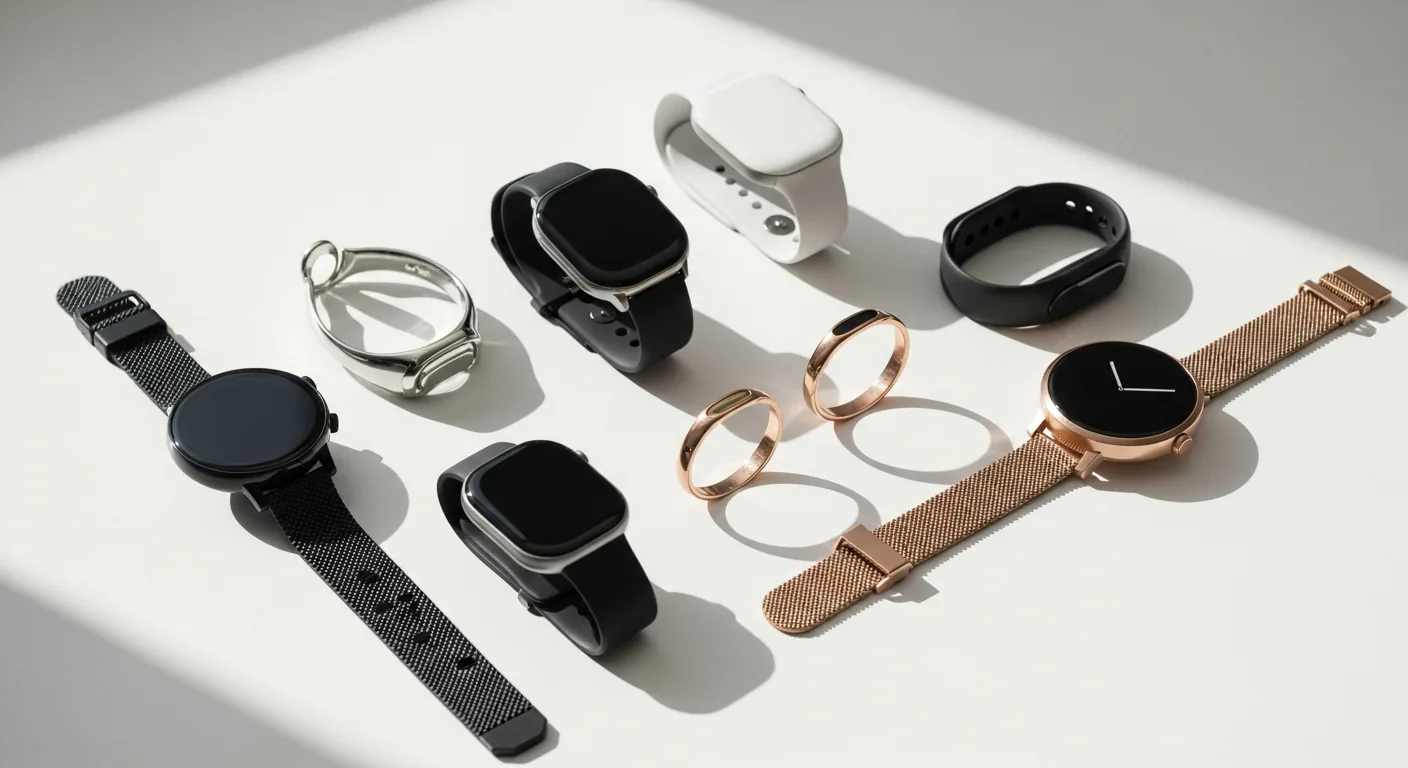
You wake up, check your phone, and realize your sleep score tanked last night—but you have no idea why. Was it the coffee? The stress? That weird dream at 3 AM? This is the reality for millions of people now trying to decode their own bodies. The market for advanced health wearables has exploded because we're obsessed with optimization, and honestly, that obsession is justified. Your body generates constant data; the question is whether you've got the right tool to read it.
What separates a genuinely useful health tracker from an expensive piece of jewelry comes down to three things: sensor accuracy (can it actually measure what it claims?), data clarity (does it explain why something matters?), and integration into your real life (does it get used or does it sit in a drawer?). A mediocre tracker floods you with numbers. A good one turns those numbers into actionable insights. The best ones do that while staying discreet enough that you forget you're wearing them.
Here's what you're getting: seven of the most compelling health wearables available right now, each with distinct strengths, actual trade-offs you should know about, and honest takes on who they're really for.
1. Oura Ring Gen 4
The Oura Ring is the device that made smart rings viable beyond novelty status. It's thinner than the previous generation, its battery lasts a full week (genuinely impressive for something on your finger), and its "Inner Circle" sensor array delivers legitimately accurate blood oxygen and heart rate variability data. If sleep tracking is your main obsession—and for some people it absolutely should be—this ring will tell you more about your sleep architecture than you probably want to know. It breaks down light, REM, and deep sleep stages, assigns readiness and recovery scores, and does it all without buzzing your wrist.
The catch? Oura doesn't work without the app and its subscription model ($5.99/month). You're paying for data interpretation, not just data collection. The ring itself has no screen, so you can't glance at your stats without your phone. For people who work out indoors a lot or care deeply about real-time workout metrics, this thing is less impressive—it tracks activity, sure, but it's not designed to replace a sports watch. The subscription might feel annoying if you're already paying for other tracking services, but the data quality keeps people coming back.
Best for: Sleep-obsessed insomniacs, biohackers, and anyone who prioritizes comfort and discretion over real-time fitness feedback.
2. Whoop 5.0
Whoop 5.0 is the device athletes actually strap on, especially if they're serious about recovery optimization. The company redesigned the sensor suite and stretched battery life to a genuinely absurd 16.5 days, which means you could theoretically forget about charging for weeks if you don't mind the power pack sitting around. It's screen-free by design—no notifications, no distractions—just pure physiological data: strain, recovery, sleep, and now blood pressure monitoring and hydration tracking that actually update throughout the day.
Here's where it gets complicated: Whoop runs on a subscription model too ($239–$359 per year), and some of its flashiest new features (the FDA-cleared ECG in the MG version, blood pressure monitoring) might be tied to higher tiers or still rolling out. The device shines for endurance athletes and recovery nerds. If you're doing casual weekend runs, it's overkill. The lack of a screen means you genuinely can't check your stats without your phone, which some people love and others find maddening. Also, Whoop's strength—obsessive detail on recovery and strain—can become a rabbit hole. Some users get so locked into optimizing strain and recovery that they forget to actually enjoy their workout.
Best for: Elite athletes, recovery obsessives, and anyone who actively hates notifications but loves granular physiological data.
3. Apple Watch Series 11 / Ultra 4
The Apple Watch isn't just a health tracker; it's your wrist's general practitioner. Series 11 brings hypertension notifications and better sleep scoring. The Ultra 4 is supposed to push further into the health realm (though blood sugar monitoring remains elusive). Both offer ECG, blood oxygen monitoring, temperature sensing for cycle tracking, and direct integration with apps like Dexcom if you're managing glucose. If you live in the Apple ecosystem, the convenience factor is enormous. Your health data syncs automatically with your iPhone, your watch buzzes with texts, and everything feels frictionless.
The trade-offs are real, though. Battery life is shorter than dedicated health trackers—you're charging every evening or every other evening. The price climbs quickly, especially if you want cellular capability or the Ultra model. Some advanced health features are still pending regulatory approval or rolling out in beta. And honestly, smartwatch health monitoring on the Apple Watch still takes a back seat to its broader functionality as a notification hub and app platform. That's fine if you want a device that does everything decently. It's a compromise if you want a device that does health monitoring exceptionally well.
Best for: iPhone users who want one device that covers fitness, health, notifications, and payments without jumping between ecosystems.
4. Garmin Fenix 8
The Fenix 8 is what you buy when you're serious about athletic performance and you spend half your time outdoors. It has multi-band GPS accuracy that puts most consumer watches to shame, topographical maps built in, battery life that stretches for weeks, and a titanium bezel that's basically indestructible. The health tracking side—Body Battery, stress, VO2 max, sleep analysis, blood oxygen—is comprehensive. But this is a device built first for athletes, second as a health tracker.
The problem: it costs $750–$2,000 depending on configuration, which is a significant amount of money. The watch is bulky, especially on smaller wrists. The interface is dense—there are so many features that you'll spend actual time learning this thing. And while Garmin's performance analytics are exceptional for runners and cyclists, it's not integrated into the broader smartphone ecosystem the way Apple Watch is. You're getting a dedicated sports computer, not a replacement for your smartwatch. If you hike, trail run, or do multi-sport training seriously, the Fenix 8 justifies its cost. If you're a casual gym-goer, you're paying for capabilities you'll never use.
Best for: Adventure athletes, serious runners and cyclists, and anyone who spends significant time in remote areas where durability and navigation matter more than integration with daily apps.
5. Withings ScanWatch 2
The ScanWatch 2 is the watch for people who hate smartwatches but need health monitoring. It looks like a traditional analog watch—actually stylish, professional-looking—but underneath is a medical-grade ECG sensor, SpO2 monitoring, and the ability to detect sleep apnea disturbances. The battery life is absurd: up to 30 days. That's not hyperbole. You'll forget you own a charging cable.
The trade-off is that smartwatch features are minimal. The digital display is tiny, so you can't see much information on-wrist. Fitness tracking exists but isn't as detailed as you'd get from a dedicated sports watch. Some of the premium features (like cardiologist-reviewed ECG analysis) require the optional Withings+ subscription. If you care about style, discretion, and serious health monitoring without the smartwatch bloat, the ScanWatch 2 wins. If you need real-time workout metrics or want to control your music from your wrist, look elsewhere.
Best for: Professionals who need medical-grade health monitoring but refuse to look like they're wearing a fitness tracker, and anyone who despises frequent charging.
6. Abbott Lingo Continuous Glucose Monitor
Lingo isn't designed for diabetics—it's designed for metabolic health curiosity. You wear a tiny sensor on your arm for 14 days, and it measures your glucose levels continuously. The app shows you how specific foods, exercise, and sleep patterns affect your glucose. For people trying to optimize energy, lose weight, or just understand their metabolism, this is genuinely eye-opening data. It's non-invasive (no fingersticks), discreet, and the app is thoughtfully designed.
The obvious catch: you're replacing sensors every two weeks, so there's ongoing cost ($120 for two sensors = $60 per two weeks). It's not a one-time purchase. The data is fascinating but not medically diagnostic—Lingo isn't designed for diabetes management, and you shouldn't treat it as a substitute for medical advice. It also lacks the urgent low/high alarms that clinical CGMs provide. But if you're curious about your metabolism and have the budget for it, Lingo provides real behavioral insights that a standard fitness tracker simply can't match.
Best for: Metabolic health enthusiasts, people experimenting with dietary interventions, and anyone trying to optimize energy and performance through personalized nutrition data.
7. JCVital Pro V8 ECG Smart Band
The JCVital Pro V8 is the dark horse option: a fitness band with four-category ECG classification, non-invasive blood glucose risk AI, AI mood tracking, and comprehensive sport performance metrics, all for about $199. It's not from a household name brand, but that's partly why the price point is so aggressive. You get PDF-exportable ECG data (useful for sharing with doctors), VO2 max estimates, strain tracking, and coaching—features that typically cost significantly more elsewhere.
The caveats matter here. "Non-invasive blood glucose risk AI" is not actual glucose measurement; it's a risk assessment based on other biomarkers. That's genuinely useful for insight, but not a substitute for actual glucose monitoring. The accuracy of all the features hasn't been as rigorously validated as devices from larger manufacturers. The aesthetic is fitness band, not watch. But if you want comprehensive health data and don't care about brand prestige, the JCVital represents real value. You're getting serious ECG and performance tracking for a fraction of what competitors charge.
Best for: Budget-conscious health data nerds, athletes who want robust metrics without paying premium prices, and anyone willing to trade some polish for features.
How to Choose the Right Advanced Health Wearables
What Are You Actually Tracking For?
Start here. Are you obsessed with sleep quality? Oura and Whoop dominate that space. Training for a half-marathon? Garmin Fenix crushes detailed performance analytics. Curious about your metabolism? Abbott Lingo is the only real option. Just want general wellness coverage? Apple Watch covers the widest range of health features. The worst mistake is buying a device because it's popular and then realizing it doesn't measure what you care about. ECG features are flashy but mostly useful if you have arrhythmia concerns or want peace of mind. Blood oxygen monitoring is helpful if you live at altitude or have sleep apnea. Be specific about your actual needs.
Battery Life vs. Screen Time
This is an actual trade-off. Rings and screen-free bands (Oura, Whoop) give you 8–16 days without charging. Smartwatches with full-color screens (Apple, Garmin) need charging every 1–3 days. Hybrid watches like Withings stretch to 30 days but with a tiny digital display. Ask yourself: would you rather charge every night but see everything on-wrist, or charge once a week but check your phone for data? For frequent travelers or people who forget to charge things, the battery life difference matters. For people who charge their phone nightly anyway, the extra charging ritual feels minor.
Subscription Model: Hidden Costs
Oura ($5.99/month), Whoop ($239–$359/year), and Withings+ (premium features) all require ongoing payments to access full functionality. The Apple Watch has no subscription. Garmin has no subscription. JCVital likely has minimal subscription requirements. If you're paying $500 upfront for a device, finding out there's a mandatory $72/year subscription later feels bad. Factor the multi-year cost into your decision. A $350 device with a $6/month subscription costs $422 in year one and $422 in year two. A $750 device with no subscription is more expensive initially but cheaper over time.
Ecosystem Integration: How It Fits Your Life
If you own an iPhone, an Apple Watch integrates seamlessly and automatically. If you use Android, you're locked out entirely. Garmin works with both but doesn't integrate as smoothly. Whoop and Oura work on both platforms but require manual app checking. Abbott Lingo requires an iPhone. Cross-platform compatibility matters if you ever switch phones or use multiple devices. Integration with other health apps (Apple Health, Google Fit, Strava) matters if you're using multiple trackers or if you want data to flow automatically between apps. Some devices are siloed ecosystems; others play nicely with others. Know your preference before buying.
Choose Your Perfect Health Wearable Match
If sleep and recovery are your religion, Oura Ring Gen 4 wins through comfort and depth. It's not the cheapest option, but no other device lets you sleep with a tracker and forget it's there while getting this much insight.
For pure athletic performance and durability, Garmin Fenix 8 is legitimately unmatched—overkill for casual users, but genuinely exceptional for serious athletes who train outdoors. The GPS accuracy and feature depth justify the premium.
Apple Watch Series 11 is the safe, practical choice if you're in the Apple ecosystem and want a single device covering health, fitness, notifications, and daily tasks without switching contexts.
The deciding factor: pick the device that measures the metric you care most about, in a form factor you'll actually wear every day. A ring you always wear beats a sports watch you remove after a week. A watch you charge nightly beats a ring if you desperately need real-time workout metrics. Start with your primary use case, then evaluate whether the battery life, price, and ecosystem fit your actual daily rhythm.
Related posts

9 Gourmet Pantry Staples Reviewed: Our Honest Picks for Elevated Everyday Eating
Smart Air Purifiers That Actually Work: 7 Advanced Systems Tested & Ranked 2026
Which AR/VR Headsets Should You Buy? 7 Top Picks Reviewed for 2026