
Which AR/VR Headsets Should You Buy? 7 Top Picks Reviewed for 2026
Explore 7 premium AR/VR headsets for everyday use. Compare specs, prices, and features to find your perfect immersive device in 2026.
Introduction
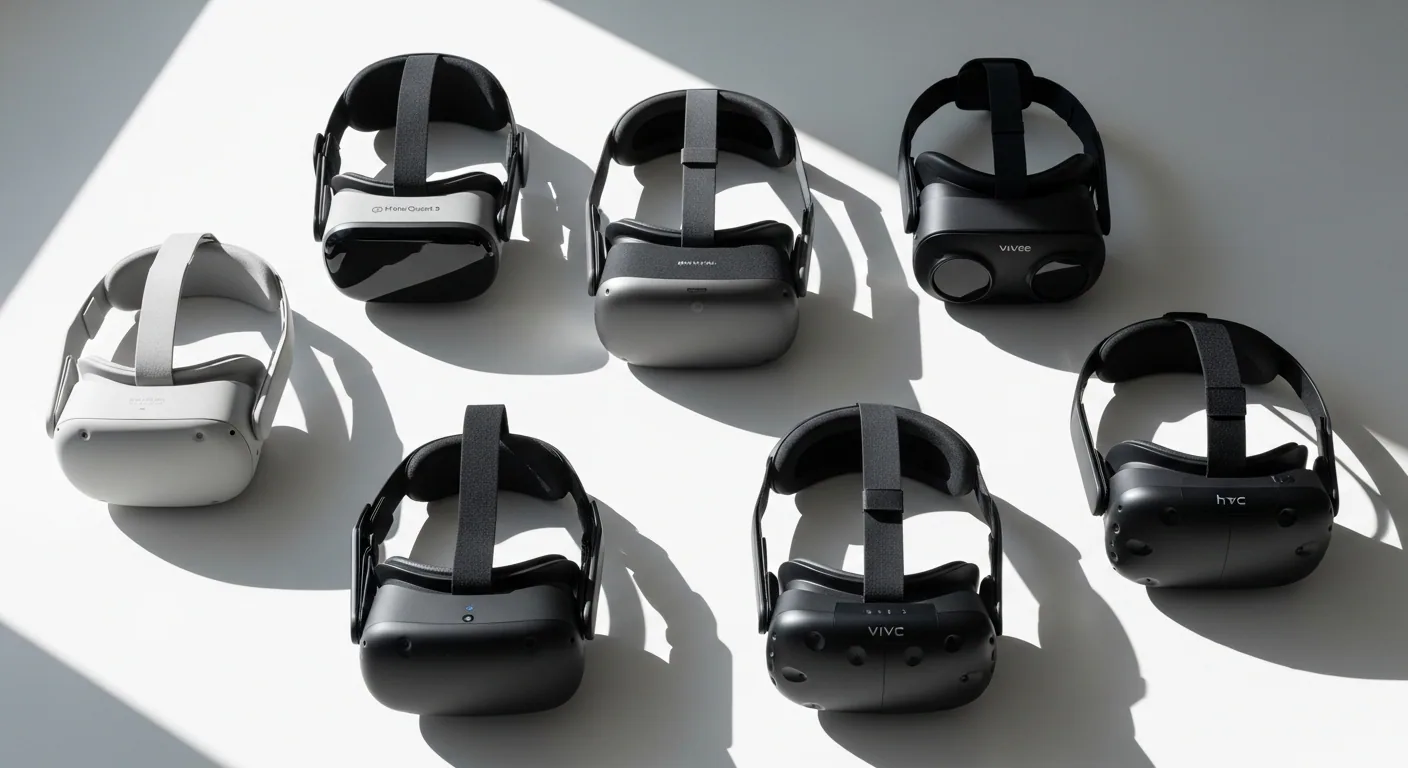
You're probably staring at your monitor right now, maybe also glancing at your phone, maybe a tablet nearby. That fragmented digital experience—bouncing between screens—feels normal until you actually try a high-quality AR or VR headset and realize how clunky traditional computing looks by comparison. The spatial computing revolution is genuinely here, and it's not some distant sci-fi thing anymore. These devices are becoming the way actual people work, play, and consume media in 2026.
What separates the worthwhile AR/VR products from the forgettable ones comes down to a few brutal truths: display quality (because a blurry headset defeats the purpose), latency (lag kills immersion faster than anything else), and whether the device actually fits your life instead of demanding your life fit around it. You also need to consider the ecosystem—an incredible headset with zero apps is just an expensive paperweight. The best products balance raw technology with genuine usability.
Here's what you're getting in this guide: seven of the most compelling AR/VR devices available or coming soon, honest analysis of where each excels and stumbles, and a practical breakdown of how to actually choose between them.
1. Meta Quest 4
Meta's betting everything on the Quest 4, expected in late 2026, and for good reason. This thing is supposed to be the device that finally makes VR comfortable enough for daily wear—lighter, thinner, with those revolutionary 4K Micro-OLED displays that might actually eliminate the screen-door effect that's plagued VR for years. The variable focus lenses are particularly clever; they adjust to your eye's focal distance, which should mean less eye strain during those long sessions where you're lost in another world.
Here's the trade-off though: Meta is ditching traditional controllers. Instead, you're getting neural input via EMG wristbands—basically, the headset reads electrical signals from your forearm muscles. It's genuinely futuristic, but it also means a learning curve. Some people will love the hands-free interaction; others will miss the tactile feedback of physical buttons. The price point ($800 for the premium model) is also steep, and the potential dual-model approach means you might be compromising on specs if you go budget. The real wildcard is whether that controller-free future actually works as smoothly as Meta claims.
Best for: Early adopters who value comfort and next-generation interaction methods, and can stomach learning a new input paradigm.
2. Apple Vision Pro 2
Apple's premium spatial computer is the aesthetic opposite of Meta Quest 4—it's unapologetically expensive at $3,499, heavy enough that you'll feel it, and tethered to an external battery pack that makes it feel less like a standalone device and more like a high-tech accessory you have to manage. But here's the thing: if you're already deep in the Apple ecosystem, the Vision Pro 2 is genuinely impressive. The M5 chip is overkill for most VR tasks, but it means zero performance compromises. That 120Hz refresh rate, the Micro-OLED displays hitting 3660x3200 pixels per eye, the video passthrough quality—it's legitimately the sharpest, most polished spatial computing experience available.
The real value proposition here isn't raw immersion; it's productivity. If you use a Mac, the Vision Pro 2 becomes an extension of your workspace in ways that feel almost inevitable once you experience it. Eye and hand tracking is class-leading and intuitive. The ecosystem is smaller than Meta's, but what exists is intentionally curated. The weight and battery situation will bother some people more than others—try before you buy, seriously. This is a device for people who see spatial computing as a replacement for their monitor setup, not a gaming gadget.
Best for: Apple devotees with disposable income who want to augment their professional workflow and don't mind the premium for polish.
3. Samsung Galaxy XR
Samsung's Galaxy XR is the pragmatist's choice in the premium segment. At $1,800, it's nearly half the price of the Vision Pro 2 while delivering genuinely competitive specs. The 4.3K Micro-OLED displays are bright and colorful, and the full-color passthrough is excellent. That Snapdragon XR2+ Gen 2 processor with 16GB of RAM is robust—you're not going to hit performance walls anytime soon.
The real differentiator is Google integration. The Gemini AI assistant built in means you get conversational AI, object identification, and content creation tools baked into the hardware. For people who want a versatile device that handles both AR and VR equally well, this is genuinely appealing. There's been some early chatter about latency issues during PC streaming, which is worth paying attention to if you're considering tethering it to a computer. The global rollout is still in progress (2026), so availability might vary depending on where you live. It's also the most "Android-forward" option, which is great if you value open ecosystems over proprietary polish.
Best for: Android enthusiasts and people who want premium spatial computing without the Apple premium, plus AI integration baked in.
4. Pico Project Swan (Pico 5 Pro)
ByteDance's Pico division is throwing serious resources at the high-end XR market with Project Swan, and the specs read like someone asked, "What if we just maxed out every single metric?" The custom 4K Micro-OLED displays with 4000 PPI are absurdly sharp—like, "monitor replacement clarity" sharp. The dual-chip architecture with that custom XR chip promises 12ms latency, which is the fastest you'll find anywhere. That's the difference between "feels like AR" and "feels like it might actually be real."
The catch is that Pico is still building its ecosystem. Yes, the custom Pico OS 6 looks promising with its Mac-style dock and floating windows, but you're not getting the library depth of Meta or the polish of Apple. This is a device for people who care more about raw technical specs than app library depth. The estimated $1,000+ price point puts it in premium territory without the brand recognition Meta has or the ecosystem integration Apple offers. It's a fascinating wildcard—potentially the most technically impressive headset available, but you're taking a bet on Pico's ability to build out the software side.
Best for: Spec-obsessed enthusiasts who prioritize cutting-edge display quality and latency above all else, and aren't bothered by a smaller app ecosystem.
5. XREAL One Pro
AR glasses that actually look like glasses—or close enough. The XREAL One Pro pivots away from the full immersion angle and instead offers you a 52-degree field of view of augmented reality overlaid on your actual surroundings. This is the device you might actually wear outside without looking like you're auditioning for a sci-fi film. The 4K per-eye resolution is sharp, and that 'X1' spatial computing chip keeps latency negligible.
Here's what you're trading for that wearability: you're not getting full VR immersion, and you'll need the XREAL Beam Pro 2 neckband accessory to unlock the full experience, which adds cost and bulk. It's fundamentally a different category—this is about overlaying digital information onto reality, not replacing reality. If your use case is AR navigation, productivity overlays, gaming that blends the real and digital, or just having a heads-up display for your daily life, this makes genuine sense. But if you want to completely escape into another world, this isn't your device. The partnership with Google gives you access to Android XR's app library, which is genuinely useful.
Best for: AR enthusiasts and professionals who want spatial computing that doesn't isolate them from their environment, and don't mind the extra accessory cost.
6. VITURE 'The Beast' (Luma Ultra XR)
VITURE showed up at CES 2026 with something genuinely different: a focus on media consumption rather than full immersion. "The Beast"—call sign Luma Ultra XR—has the sharpest display in the entire AR/XR category right now. That 1200p Micro-OLED with electrochromic dimming (the lenses can go fully opaque) means you can actually create a private cinema experience without looking like you're blocking out the world. The real-time 2D to 3D conversion is gimmicky in theory but shockingly effective in practice, breathing new life into standard content.
The 6DoF support and hand gesture recognition are solid, but you need to understand what this device is: it's optimized for watching, not doing. Complex VR applications and intense gaming aren't its sweet spot. The requirement for a neckband or tethered device to unlock full features is a practical compromise that some will find liberating and others will find annoying. At $599-$799, it's reasonably priced for what you get, but you're paying for a specialized experience, not a generalist workhorse.
Best for: Media enthusiasts and cinephiles who want to watch movies and shows in an immersive format without the bulk of traditional VR, and don't need robust gaming performance.
7. HTC Vive XR Elite
HTC Vive XR Elite is the Swiss Army knife of spatial computing—a device that genuinely works as a standalone headset, a PC VR device, and even a lighter VR experience if you detach the battery. The 4K combined resolution (1920x1920 per eye) with a 90Hz refresh rate and 110-degree FOV is solid without being bleeding-edge. What matters more is the practicality: this headset accommodates people who wear prescription glasses (individual diopters), supports both standalone and tethered modes, and balances features across use cases rather than maxing out any single metric.
The modular design is genuinely clever—you can ditch the bulky battery cradle and turn it into a lighter pair of VR glasses if you're streaming from a PC. The Snapdragon XR2 processor is slightly dated compared to what you get in some 2026 flagship models, and the battery life for standalone use (roughly 2 hours) is respectable but not impressive. This is a device for people who don't want to pick a lane—who want flexibility, comfort, and the ability to use it across different scenarios. It won't blow you away with specs, but it'll reliably deliver across the board.
Best for: Practical users who value versatility and comfort over raw specs, especially prescription glasses wearers who want full flexibility in how they use their headset.
How to Choose the Right AR VR Everyday
Define Your Use Case First
Before touching anything, be brutally honest about what you're actually going to do with this device. Are you a gamer? A productivity-focused professional? Someone who wants AR overlays for daily life? A media consumer? Each of these use cases pushes you toward different hardware. Full immersion VR headsets are completely different animals from AR glasses. If you're torn, you probably actually need the middle-ground option—something like the Vive XR Elite that does multiple things competently. Don't fall for marketing language about devices being "everything to everyone." They're not.
Display Quality and Field of View Matter More Than You Think
Resolution is only part of the story. Pixel density (how sharp the image actually appears), refresh rate (smooth motion at 90Hz minimum, 120Hz preferred), and field of view (how much of your peripheral vision the display covers) all interact to create immersion. A 52-degree FOV feels cramped compared to 110 degrees. A sharp 1200p display beats a blurry 4K display every single time. Don't just look at raw specs; try devices if possible, because low-quality displays will fatigue your eyes in 30 minutes. High-quality displays become invisible.
Ecosystem and App Library Are Non-Negotiable
The best hardware in the world is worthless if there's nothing to do with it. Meta Quest has the deepest app library, Apple has curated quality over quantity, Android XR is growing rapidly, and niche platforms like Pico are still building out. Consider what you actually want to run: games, productivity apps, media apps, or specialized professional software. If an app doesn't exist for what you need, the hardware doesn't matter. Also think about longevity—is this company going to support the device two years from now?
Comfort and Design Affect Real-World Usage
Weight, heat distribution, battery design, whether it requires external accessories—these practical factors determine whether you'll actually wear the thing. The Vision Pro 2 is beautiful but heavy; the Quest 4 promises to be lighter; AR glasses like the XREAL One Pro prioritize not looking ridiculous in public. A "perfect" device you hate wearing is worse than a "good" device you actually use daily. If you wear glasses, find a device that accommodates prescriptions. If you care about battery independence, check the actual battery life in real-world conditions, not marketing specs.
Your Next Step Into Immersive Computing
If you want the safest bet, Meta Quest 4 is the obvious choice—it's positioned to be the mainstream entry point to spatial computing, balancing price, performance, and ecosystem maturity. If money isn't a constraint and you're already in the Apple world, the Vision Pro 2 is genuinely the most polished experience you can buy. For a middle ground that actually delivers on versatility, the HTC Vive XR Elite does everything competently without forcing you into one category.
Stop waiting for the "perfect" device—it doesn't exist. Pick what aligns with your actual use case (not hypothetical use cases), prioritize display quality and comfort over spec sheets, and make sure the ecosystem supports what you actually want to do. Then jump in. The immersive computing future isn't coming; it's here, and it's weird and exciting in ways that specs alone can't capture.
Related posts

Native Deodorant Review: Natural Odor Protection That Actually Works
Karinear 2 Burner Electric Cooktop Review: Compact Power for Modern Kitchens

6 Kids Toys Reviewed: Our Honest Picks for 2026