
7 Smart Home Gardens That Actually Deliver Fresh Produce Year-Round
Discover 7 advanced smart indoor gardens for year-round fresh produce. Compare features, prices, and find the perfect system for your home and budget.
Introduction
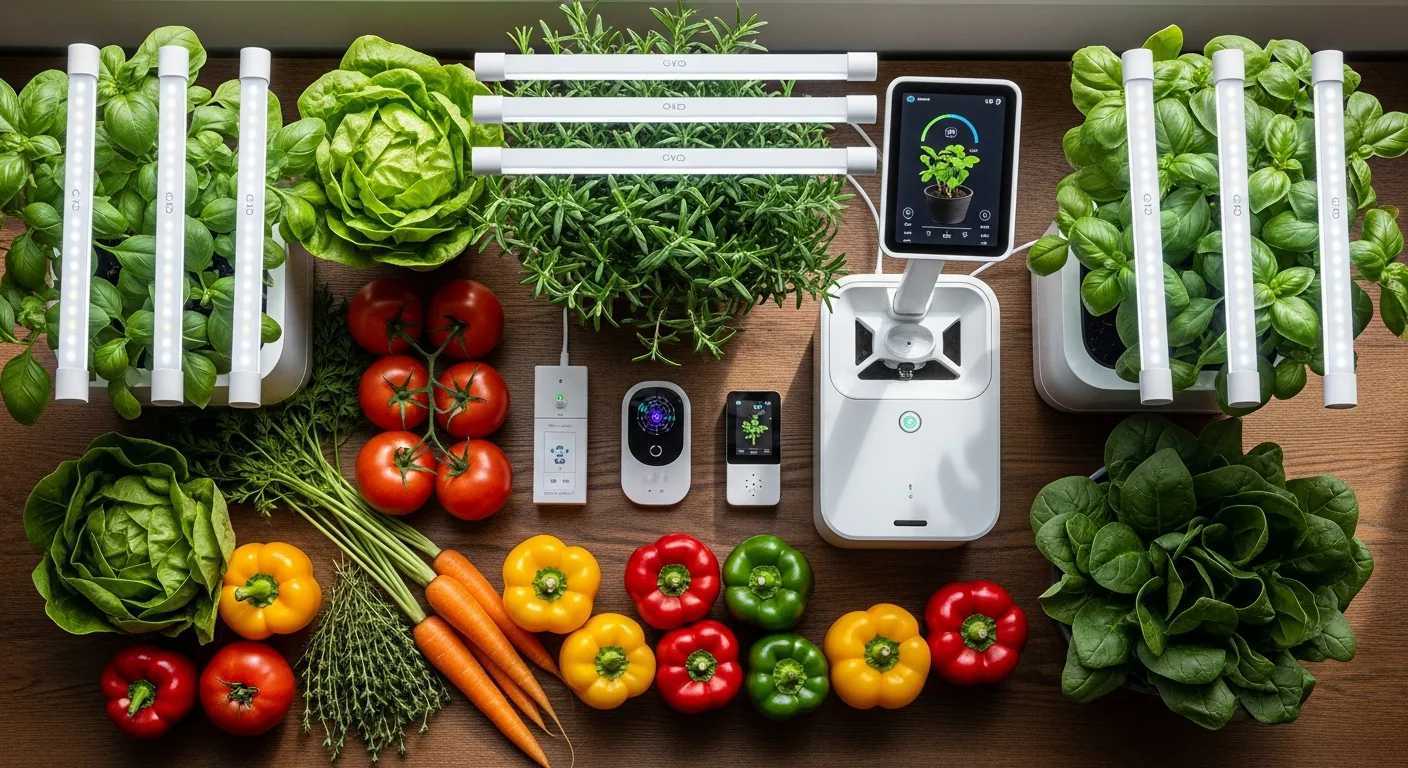
You're standing in your kitchen in January, craving a salad with fresh herbs you actually grew yourself—not that sad, wilted stuff from the supermarket that costs five bucks and dies in three days. Smart indoor gardens make this possible, and they've genuinely gotten impressive over the last few years. The technology has caught up to the ambition.
What separates the worthwhile systems from the overpriced gimmicks comes down to three things: whether they actually reduce your workload (or just shift it around), if the yields justify the space they consume, and whether they're designed for someone like you or just for Instagram aesthetics. A $1,000 system that requires daily babying isn't smart. A $100 gadget that grows nothing but false hope is worse.
Here are seven systems worth considering, ranging from single-plant minimalists to serious 36-plant vertical farms.
1. AeroGarden Farm XL
The Farm XL is the heavy hitter here. This thing will grow actual vegetables—tomatoes, peppers, eggplants—not just herbs and microgreens. You get 36 inches of vertical space, which means you're not constrained to dwarf varieties or baby lettuce. The capacity for 24 plants simultaneously is substantial, and the hydroponic system handles all the tedious nutrient balancing for you. The app tells you when to refill water and when nutrients are needed, and the full-spectrum LED lights adjust automatically.
Here's the trade-off: it's expensive ($600–$800), and those grow lights are bright—like uncomfortably bright in a small apartment. You'll want to place it somewhere purposeful, not wedged into a living room corner. It also demands dedicated space; this isn't something you tuck away. But if you're serious about producing enough herbs, greens, and vegetables to actually impact your grocery bill, this delivers.
Best for: Someone with kitchen or garage space who wants to grow beyond herbs and doesn't mind the upfront investment or light intensity.
2. Gardyn Home Kit 4.0
This is the tech-forward option. Gardyn's "Kelby AI plant coach" uses built-in cameras to watch your plants and diagnose problems before they become actual problems. Real-time insights, tailored care tips, predictive health alerts—if you're the type who wants a gardening copilot, this is it. The vertical design fits 30 plants in a compact footprint, and it uses 95% less water than traditional gardening. The app integration is genuinely thoughtful, and setup is straightforward even if you've never grown anything.
But there's a sting: you're paying $899–$999 upfront, then $29–39 monthly for the subscription (non-negotiable). That's roughly $500 extra per year just to keep the AI running. The system also requires regular tank cleaning, which some users find tedious. It's a large footprint when fully set up, so you need dedicated space. If you view the monthly fee as insurance against gardening failure, it's worth considering. If monthly subscriptions make you grimace, look elsewhere.
Best for: Tech-optimized people who want AI assistance and don't mind recurring costs for a premium experience.
3. Lettuce Grow Farmstand
The Farmstand is beginner-friendly in a way that actually works. It ships pre-grown seedlings, which eliminates the "why are my seeds not sprouting?" phase that kills most people's motivation. You're starting with actual plants, not tiny seeds and hope. The vertical tower accommodates 36 plants, it self-waters and self-fertilizes, and you're looking at five minutes of weekly maintenance. The water savings are massive—95–98% less than traditional farming.
The catch is that ongoing costs add up. You're buying proprietary seedlings (over 200 varieties available, which is nice), and if you want to use it indoors year-round, you need to add LED "Glow Rings," which bumps the price. The water pump can be audible, which bothers some people. And once it's full, it's heavy—placement matters. The system is genuinely low-effort for maintenance, but you're trading flexibility and lower ongoing costs for that convenience.
Best for: People who want a vertical garden that practically runs itself, with pre-grown seedlings eliminating the germination guesswork.
4. Click & Grow Smart Garden 27
The Click & Grow is the definition of low-friction gardening. Twenty-seven plant pods, pre-seeded, self-watering, self-lighting. You fill the water tank, plug it in, and it runs for months. The patented "Smart Soil" in each pod is designed to provide everything plants need without traditional soil mess. The aesthetic is clean and modern, and it works wall-mounted or standing.
The drawback is you're locked into proprietary plant pods for most purposes, though custom seedless pods exist if you want to experiment. The LED lights are bright—really bright. And yes, the system is pricey ($550–$850). But the genius here is simplicity. There's no app complexity, no water chemistry to manage, no guessing. It's "set it and forget it" taken seriously.
Best for: Someone who wants effortless year-round growing of herbs and greens and is willing to stay within the Click & Grow ecosystem.
5. Rise Gardens Personal Garden
Rise Gardens designed this system to grow with you. Start with the compact "Personal Garden" and expand to larger configurations later. The modular approach reduces commitment anxiety. The hydroponic system circulates water and nutrients automatically, and the app provides AI-based nutrient dosing—so you're not manually measuring chemicals. The LED lighting is integrated and appropriate. You can grow 8 to 36 plants depending on which model you choose.
Real talk: the smallest models can be finicky—some users report the 4-seed nursery tipping over too easily. Larger reservoirs require cleaner water than some hydroponic systems, and you'll want to monitor more often than the company suggests. Manually checking nutrient levels in the reservoir isn't convenient. But if you pick the right size for your needs, the modularity and app guidance make this accessible to beginners.
Best for: Someone who wants to start small and expand later, with app-guided nutrient management taking the guesswork out of hydroponic care.
6. iHarvest Indoor Garden
The iHarvest is about merging function with design. It uses Nutrient Film Technique (NFT), which efficiently delivers water and nutrients to roots in a thin film rather than flooding. The vertical hydroponic design maximizes yield in minimal space while looking intentional—not like a science experiment. This is built for small apartments and urban spaces where aesthetics matter as much as production.
The specifics on app features are less detailed in reviews, which is slightly concerning for a "smart" garden system, but it's included in this category for a reason. The price is steep ($800–$900) compared to some alternatives. NFT systems can require more precise monitoring than other hydroponic methods, so you're trading aesthetic appeal and space efficiency for slightly more attention to detail on maintenance.
Best for: Urban dwellers who want a visually sophisticated vertical garden that doubles as home decor.
7. Botanium Vega
The Vega is refreshingly simple. One plant. Automatic watering every three hours. Porous clay growing medium. No app, no proprietary pods, no complexity. You choose whatever seeds you want and plant them. The design is minimalist and modern, and it costs only $100–150. This is genuinely accessible entry into smart gardening, and the single-plant focus removes decision paralysis.
Here's what you're sacrificing: you grow only one plant at a time. You'll need to buy specialized nutrients. Algae can accumulate in the water tank if you're not vigilant. But as a starter system or a desk plant for the office, it's honest and effective. It doesn't pretend to be something it's not.
Best for: First-time gardeners, office desk growers, or anyone who wants to dip a toe into smart gardening without commitment or complexity.
Bonus: iDOO Hydroponics Growing System (12-Pod)
The iDOO offers a sweet spot for budget-conscious beginners. Twelve plant pods, automatic LED grow lights (16 hours on/8 hours off), adjustable height, touch panel controls, 5L tank with quiet pump and water alerts. You're getting modular hydroponic growing for $100–150. The system is straightforward to set up, the LED modes let you adjust for vegetative versus flowering growth, and it handles herbs, lettuce, and small vegetables without drama.
Seeds aren't included, so you'll buy those separately. The tank is smaller than premium systems, so you're refilling more often. But for the price, this is honest gear that works. It's not flashy or AI-powered, just reliable.
Best for: Budget-conscious beginners who want a genuine hydroponic system without premium pricing.
How to Choose the Right Smart Home Gardens
Space and Setup Reality
Measure your actual available space before ordering. The AeroGarden Farm XL and Gardyn need dedicated real estate—they're not tucking into corners. Vertical systems like Lettuce Grow and iHarvest maximize yield per square foot, which matters in apartments. Single-plant systems like the Botanium Vega and small iDOO units fit desks and shelves. Also consider where you'll place it relative to power outlets and water refills. A system in the basement is less convenient than one in the kitchen.
Maintenance Tolerance
Honest question: how much hands-on care are you actually willing to provide? Click & Grow and Lettuce Grow are genuinely low-maintenance once running. Rise Gardens and AeroGarden require periodic attention to water and nutrient levels. iHarvest with NFT technology demands more precise monitoring. Botanium Vega and iDOO sit somewhere in the middle. Match the system's maintenance profile to your actual lifestyle, not your imagined ideal lifestyle.
Yield Versus Cost
A $100 iDOO growing 12 herbs is fundamentally different from a $800 iHarvest growing high-density greens. Calculate cost-per-plant and realistic monthly harvests. If you're growing primarily for aesthetics and the occasional fresh herb, a smaller system makes sense. If you're trying to offset grocery bills, you need capacity—that's AeroGarden or Lettuce Grow territory. Don't pay premium prices for 36-plant systems if you'll realistically use 8.
Flexibility and Lock-in
Some systems are ecosystem-dependent. Click & Grow, Gardyn, and Lettuce Grow rely on their proprietary pods and accessories. Botanium Vega lets you plant anything. AeroGarden has generic seed pods available. If you want experimentation flexibility, avoid locked ecosystems. If you prefer guided simplicity, the proprietary systems handle that better. Also consider recurring costs—subscriptions (Gardyn), seedlings (Lettuce Grow), and replacement pods add up.
Best Smart Indoor Garden for Your Home
For most people, Lettuce Grow Farmstand hits the best balance. It's beginner-friendly with pre-grown seedlings, genuinely low-maintenance, and the vertical design maximizes yield in small spaces. It scales up if you want more, and the water savings are legitimate.
If you have kitchen space and want actual vegetable production, AeroGarden Farm XL justifies its $600–800 price through sheer capacity and reliability. You'll grow real food, not just herbs.
If you're budget-conscious and just starting, iDOO's 12-pod system at $100–150 is honest equipment that works without pretense or subscriptions.
Pick the system that matches your actual space, realistic maintenance habits, and whether you're gardening for aesthetics, food production, or both—then actually use it.
Related posts
BLACK+DECKER 10 Cu. Ft. Top Mount Refrigerator with Freezer: Complete Guide for Small Spaces
EUHOMY Ice Maker Cleaner & Descaler Review: Keep Your Ice Fresh and Machines Efficient
Karinear 2 Burner Electric Cooktop Review: Compact Power for Modern Kitchens