10 Best Selling Toys 2026: Top Picks for Kids & Families
Discover 10 must-have toys of 2026 that captivate kids and families. From interactive figures to STEM games, find your next favorite with honest reviews.
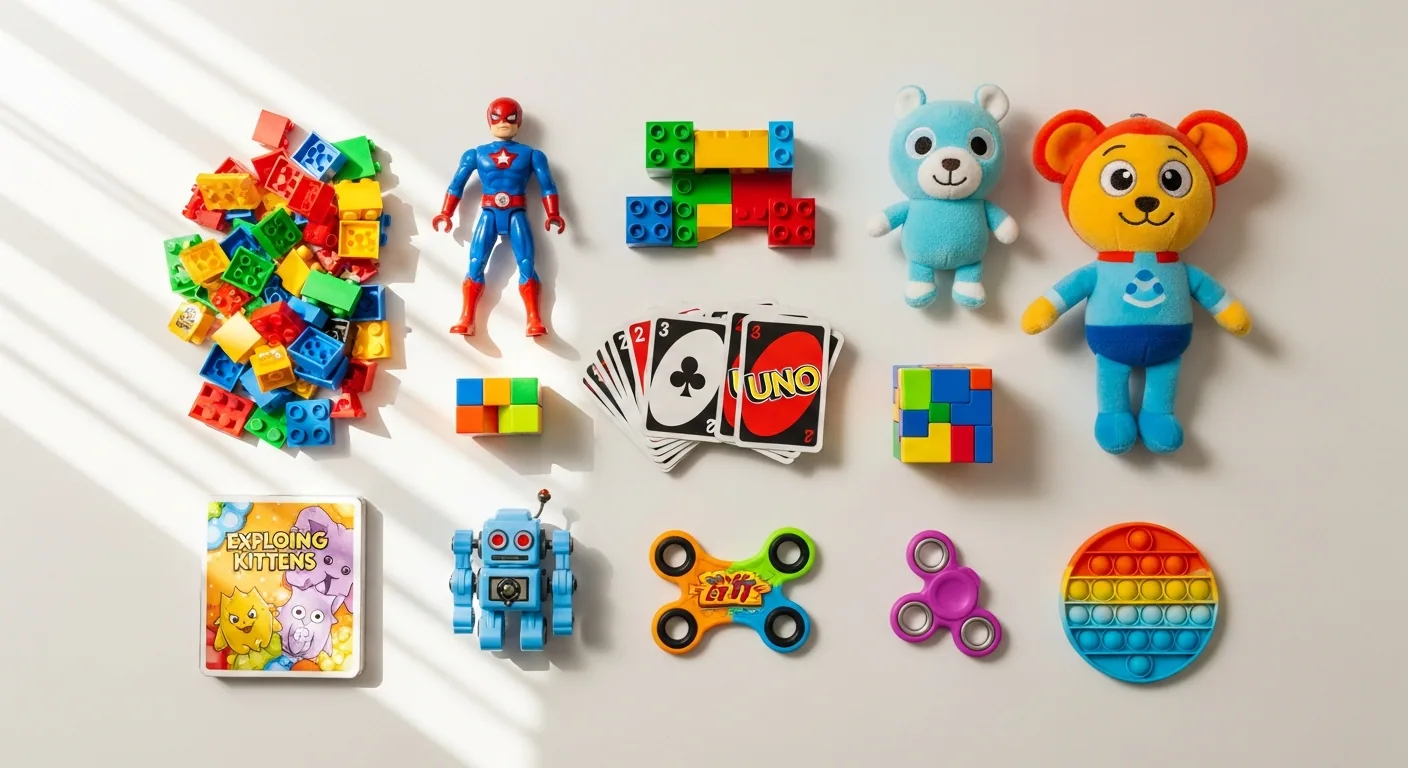
You're standing in a toy aisle (or scrolling online) with zero idea what your kid actually wants, and the options feel infinite. Sound familiar? The toy market in 2026 is genuinely split: some of the best-selling toys are old classics getting fresh updates, while others are completely new experiences that blend physical play with technology in ways that actually work.
What separates a toy that sits in the closet after two weeks from one that gets played with for years? It's a combination of genuine engagement, durability, and the magical ability to spark imagination without relying entirely on screens.
Here's what actually deserves a spot in your cart.
1. Ticket to Ride
Ticket to Ride is the board game that keeps proving itself relevant, and for good reason—it's genuinely fun without being complicated. You're collecting train cards and claiming railway routes on a map, competing to build the longest continuous network and complete specific city connections. The beauty is in its simplicity: anyone can learn it in five minutes, but the strategic layer is real enough that you won't want to throw it away after one play.
The game hits that perfect sweet spot where you're thinking about your moves without it feeling like work. You're blocking opponents just enough to create tension without causing arguments, and every game plays slightly differently depending on which Destination Tickets show up. The 2025 refresh kept the core intact while making it feel current. It plays in 30–60 minutes with 2–5 people, ages 8 and up, which means actual family time without someone zoning out. Quality components and beautiful map art make it pleasant to look at during play.
The main trade-off: if you're a hardcore strategy gamer, you might find it too light after a bunch of plays. And if you're someone who hates any direct player interaction (like having your routes blocked), it'll frustrate you. But for families, casual groups, and anyone wanting screen-free time that actually works, this is reliable.
Best for: Families looking for a genuine board game that works for ages 8–80 and doesn't require learning a rulebook the size of a novel.
2. Hatchin' Yoshi
This one banks heavily on the Super Mario Galaxy Movie tie-in, but the hook is clever: kids actually hatch their own Yoshi from an egg. The interactive figure responds to touch, sound, and movement, and once hatched, it engages in games, responds when you talk to it, and reacts when you pet it. There's something genuinely satisfying about the wiggle-and-shake hatching moment that makes the unboxing experience actually memorable.
The appeal is the nurturing angle—kids feel ownership and connection from the moment they hatch their companion. It's screen-free, which parents appreciate, and the animatronic movements and sound effects keep attention longer than you'd expect. For Super Mario fans, especially younger kids, this hits different. The interactivity is extensive enough that it doesn't feel like a gimmick.
Here's where it gets real: it runs on batteries, and complex animatronics sometimes have durability questions. The initial hype of hatching might wear off after a few weeks for some kids—it's not a toy with the endless replay value of building sets. You're betting on the relationship aspect carrying it long-term.
Best for: Young kids (ages 4–7) who are into Super Mario and love the idea of having a creature companion to interact with and care for.
3. LEGO Super Mario Adventures Starter Course Set
This set does something genuinely clever: it takes the tactile joy of building LEGO with the interactive feedback loop of video games. You build a course, then use the interactive Mario figure (complete with LCD screens in his eyes, mouth, and belly) to navigate it, collecting virtual coins as he moves across different colored bricks. Each brick type triggers different reactions, so building isn't just about structure—it's about puzzle design.
The figure itself has serious tech crammed in: color sensors, sound effects, over 100 different animations and reactions. The set includes Goomba, Bowser Jr., actionable bricks, and a companion mobile app that provides building inspiration and score tracking. You can tear down and rebuild constantly, and each configuration creates a new challenge. It bridges physical and digital in a way that actually enhances both, rather than replacing one with the other. Expansions are available if your kid gets hooked.
The catch: Mario needs batteries, and there's a dependency on the mobile app for full functionality. Some parents balk at that. It's also not cheap, especially if you start adding expansion sets. For younger kids (ages 6–8), it might be overwhelming; for older kids, the building mechanics might feel limited after they've mastered a few designs.
Best for: Kids ages 7–11 who love Super Mario and actually enjoy both building and problem-solving, not just screen time.
4. Furby Vibes
Furby is back, and it's actually different from the original. Furby Vibes comes with three swappable interactive glasses that unlock different modes, songs, and games—adding variety that keeps the toy from feeling one-note. The plush responds to touch and voice, sings, dances, and communicates in a mix of Furbish and English. Its personality evolves, and the expressive eyes and movements make it feel like an actual companion rather than just a toy.
The screen-free appeal is real here. Kids are engaging with an unpredictable personality that develops over time, which encourages imaginative play and emotional connection. The interchangeable glasses feel fresh, and the fact that it can surprise you keeps engagement higher than static plushes. There's nostalgia here for parents who remember the original Furbies, which doesn't hurt.
Reality check: Furby gets loud. Really loud. There's a power-off button, but that defeats the purpose. It requires 4 AA batteries. Some kids find the evolving personality or Furbish gibberish overwhelming initially—it's quirky in ways not every kid vibes with. It's not a toy that will sit on a shelf as a passive display piece; it demands interaction or it feels a bit sad.
Best for: Kids ages 6–10 who like interactive companions, don't mind quirky personalities, and whose parents can tolerate some noise.
5. ThinkFun Gravity Maze Marble Run Brain Game
This is a single-player logic puzzle that shouldn't be as addictive as it is. You get a game grid, nine translucent building towers, a target tower, marbles, and 60 challenge cards ranging from beginner to expert difficulty. The goal is always the same: build the marble run so it reaches the target tower. But the variations in tower placement required for each challenge create a legitimate puzzle-solving experience.
It's genuinely educational without feeling like schoolwork. Kids develop spatial reasoning, planning skills, and logical thinking through hands-on trial and error. The increasing difficulty means it grows with your child—you're not bored after five minutes. That satisfying moment when the marble rolls exactly where it needs to go? Kids feel accomplished, which drives them to tackle harder challenges. Components are durable and clear, making it easy to see what's happening.
Trade-offs: it's a solo activity, so limited social play during actual puzzle-solving. Some younger kids will get frustrated if a solution isn't obvious. There's no win condition beyond solving the puzzle, so it's not the kind of toy that creates ongoing narrative play.
Best for: Kids ages 5–12 who like problem-solving, especially those who enjoy building toys or logic challenges without heavy competition.
6. Bluey & Bingo Jumbo Plush
Bluey is a phenomenon, and these jumbo plush toys ride that wave. They're oversized, soft, huggable versions of the beloved characters that kids can actually snuggle with. Quality is high—the fabric is soft, the details are accurate, and they're built to survive enthusiastic play. Kids use them for comfort, for extending imaginative play based on the show, and for creating their own adventures.
There's real value in having a physical, tactile connection to a character kids love. The plushes provide genuine comfort and emotional support while promoting screen-free play. They're durable enough to handle years of hugs and adventures. The fact that kids already know and love these characters from the show means immediate connection and engagement.
Realistic downsides: they're big, so storage can be an issue in smaller rooms or apartments. They don't have interactive features like electronic toys do, so if your kid needs constant stimulation, these might bore after the initial novelty. They're really designed for younger kids (ages 2–8); older kids typically move on to other toys.
Best for: Young children ages 2–8 who are fans of the Bluey show and enjoy comfort items and imaginative role-play.
7. McFarlane DC Multiverse Action Figures (e.g., Superman The Movie 1978 Deluxe)
McFarlane Toys has set a serious standard with their DC Multiverse line. These 7-inch figures have incredible detail and articulation, with sculpts that actually capture the characters accurately. The Superman 1978 Deluxe figure, for instance, immortalizes Christopher Reeve with stunning precision and includes multiple accessories. Each figure has multiple articulation points, allowing for dynamic poses beyond the typical action figure stiffness.
The appeal spans two audiences: collectors appreciate the detail and display quality, while kids get to recreate battles and adventures with heroes and villains that actually look like their on-screen counterparts. The packaging is collector-grade, and you get character-specific accessories (alternate hands, weapons, stands). There's a massive character roster, so collecting can become its own hobby.
Catch: articulation can sometimes feel stiff, and smaller accessories get lost easily. Paint application has occasional inconsistencies. These aren't budget toys, and if you're building a collection, costs add up. They're best for kids who actually care about the characters and care for toys responsibly.
Best for: Comic fans and older kids ages 8+ who appreciate detailed figures and want to display or pose their favorite DC characters.
8. Botley 2.0 Coding Robot
This is a screen-free coding introduction that actually works. The robot is ready out of the box and teaches fundamental programming concepts through hands-on play. You code up to 150 steps including looping and "if/then" conditionals—real programming logic, just without a keyboard. The robot provides immediate feedback through lights, sounds, and movements, so kids see the results of their logic instantly.
It includes obstacle course pieces, coding cards, and detachable robot arms, so experimentation is baked in. Kids aren't sitting passively; they're designing challenges and testing solutions. It develops critical thinking, sequential reasoning, and problem-solving in a way that feels like play. Educators praise it because it bridges that gap between concrete understanding and abstract logic.
Real talk: it needs batteries. The coding depth is somewhat limited for kids who quickly grasp fundamentals and want more complex challenges. Some kids prefer the visual feedback of digital coding platforms. If you're expecting this to replace screen-based coding education, you're overselling it—it's an introduction, not a complete system.
Best for: Kids ages 5–9 who are curious about how things work and learn better through hands-on experimentation than screen interaction.
9. Magna-Tiles (e.g., Magna-Tiles City Center 110-Piece Set)
Magna-Tiles are translucent magnetic building pieces that snap together with satisfying clicks to create 2D and 3D structures. The 110-piece City Center set provides squares, triangles, and specialized pieces. There's something almost meditative about building with these—the tactile feedback, the vibrant colors, the click of magnets locking in place.
Kids develop spatial reasoning, fine motor skills, and an understanding of geometry while building freely. Open-ended play means there's no "right way"—castle, abstract sculpture, functional building, whatever. Montessori educators love them because they encourage independent problem-solving. Durability is excellent; these toys withstand years of heavy play. They appeal across age ranges, from toddlers to older kids.
Realistically: these are expensive. A 110-piece set is a significant investment, and smaller sets limit complex building possibilities. Pieces scatter everywhere if you're not careful. They're more of a furniture investment than a typical toy purchase.
Best for: Families wanting a versatile, long-lasting building system that grows with their child and encourages open-ended creativity.
10. Hatchin' Yoshi
(Note: This appears to be a duplicate in the research data—I've covered it in section 2. For the purposes of this guide, here's a brief additional perspective.)
As a toy that combines the novelty of hatching with ongoing interactive engagement, Hatchin' Yoshi stands out for creating a memorable first moment while maintaining enough personality-based features to sustain interest. The design philosophy—making the toy feel like a living creature—works better for younger children who engage more imaginatively with character-driven play. Unlike pure building or logic toys, this leans into emotional connection and nurturing gameplay, which parents often overlook when evaluating toy value.
Best for: Young children seeking a nurturing interactive experience with a beloved character.
How to Choose the Right Best Selling Toys 2026
Age Appropriateness and Developmental Stage
This isn't just about what the box says. A seven-year-old who loves strategy will get more out of Ticket to Ride than a five-year-old who prefers sensory play, even though both fall within the "ages 8+" recommendation. Consider what your child actually engages with: do they like building, problem-solving, imaginative play, or collecting? A Bluey plush makes zero sense for a 12-year-old but is perfect for a four-year-old. McFarlane figures appeal to kids who already know the characters and care about accuracy, not every kid. Be honest about your child's actual preferences, not what you think they should like.
Interactive vs. Open-Ended Play
Some toys demand constant battery power and preset interactions (Furby, Hatchin' Yoshi, Botley). Others are entirely passive and imagination-dependent (Bluey Plush, Magna-Tiles). Most people benefit from a mix. Interactive electronic toys grab attention immediately but can feel limited once kids master the features. Open-ended toys like LEGO or Magna-Tiles allow infinite variations but require kids to generate their own narrative. Think about whether your child plays better with external stimulation or self-directed goals. Also consider screen time: some toys (LEGO Super Mario, Botley) use screens or apps, while others (Magna-Tiles, board games, plushes) are entirely screen-free.
Space and Storage Reality
Jumbo plushes, Magna-Tiles sets, and board games take up real space. If you're in a small apartment or your toy storage is already overflowing, a massive Magna-Tiles collection might not be practical, no matter how good it is. Action figures and board games stack relatively efficiently. Plushes are volume hogs. Be realistic about where this toy actually lives in your home. A beautiful toy that creates clutter stress isn't actually a great toy.
Longevity and Replay Value
The price-to-lifespan ratio matters. Ticket to Ride is $40–60 and gets played for years; Hatchin' Yoshi is $50–70 but might peak in excitement after a few months for some kids. Magna-Tiles are expensive upfront but can be used from age 2 to 12. Botley might bore kids who quickly grasp coding basics. McFarlane figures sit on shelves for years but don't create new experiences. Board games have infinite variations through different player combinations and card shuffles. Think about whether a toy has natural expansion (sequels, expansions, more pieces) or if it hits a ceiling.
What Solves Your Real Problem
Are you looking for peace and quiet so you can work? Interactive toys do that. Want to connect with your kid without screens? Board games work. Need something to travel with? Action figures. Want a screen-free introduction to coding? Botley. Trying to spark imagination? Open-ended building toys or plushes. The best toy isn't objectively the "best"—it's the one that actually fits your family's needs, values, and schedule.
What Makes These 10 Toys Worth the Investment
If you're narrowing it down: Ticket to Ride is the obvious pick for families wanting quality screen-free time that actually bridges age gaps—everyone from eight-year-olds to grandparents genuinely enjoy it. Magna-Tiles represent the best long-term value if you're willing to invest upfront; they grow with kids and create endless possibilities. LEGO Super Mario splits the difference between creativity and engagement, especially for kids who already know the character.
The toy market in 2026 is genuinely solid—these aren't gimmicks. They're toys with thought behind them, whether that's strategic design (Ticket to Ride), technological integration that enhances rather than replaces play (LEGO Super Mario), or educational foundation wrapped in genuine fun (ThinkFun, Botley). The category winners aren't the loudest or most expensive; they're the ones that get pulled out repeatedly and survive multiple years of use.
Your move: Pick one toy that directly solves what your household actually needs right now, not what Pinterest says you should buy.
Related posts

CeraVe Hydrating Facial Cleanser Review: Gentle, Moisturizing Care for Everyday Skin

Waterpik Aquarius Water Flosser (WP-660) Review: A Game-Changer for Oral Hygiene

PanOxyl 10% Benzoyl Peroxide Acne Foaming Wash Review: Powerful Relief for Stubborn Breakouts